The amphibious equipment market is entering a period of measurable change shaped by climate adaptation, green infrastructure investment, evolving regulation and innovations in machinery design. As governments and private contractors expand work in wetlands, river basins and coastal zones, the demand for specialized amphibious machinery continues to rise. Stakeholders across the value chain—including investors, OEM partners such as Wilco Manufacturing, and market analysts—require a clear understanding of how the future of the marsh equipment industry is likely to develop.
This report provides a data-backed examination of 2025 market trends, emerging needs, equipment adoption patterns and opportunity landscapes. It integrates the key phrases “amphibious equipment market trends 2025 future of marsh equipment industry,” and “demand amphibious machinery” in a natural way to support SEO clarity and expert-level readability.
1. Market Overview: Rising Need for Amphibious Solutions
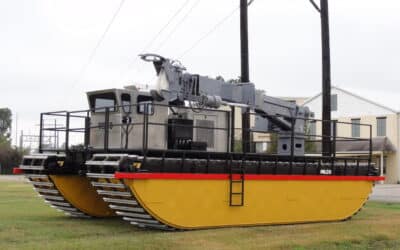
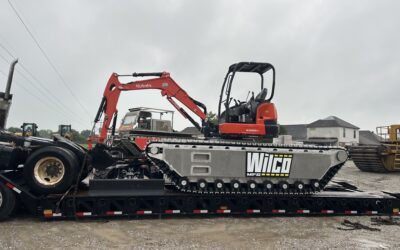
Amphibious excavators, marsh buggies, pontoons, and low-ground-pressure support vehicles occupy a critical niche where traditional heavy equipment cannot operate. Wetlands, saturated soil, shallow water and tidal zones create environments that demand low ground pressure, buoyancy support and precision mobility.
In 2025, the amphibious equipment market continues to expand due to various structural drivers:
- Climate-driven flooding and coastal erosion
- Government investment in green and blue infrastructure
- Dredging and wetland restoration programs
- Hydropower and inland waterway maintenance
- Urban expansion into soft-soil zones
- Environmental compliance for habitat protection
These broad forces collectively push the demand for amphibious machinery beyond traditional dredging and civil works. Operators increasingly require multi-purpose equipment, modular undercarriages, electric-assisted systems and data-enabled machines that limit environmental disturbance.
2. Key Amphibious Equipment Market Trends in 2025
A combination of environmental policies, increased restoration activity and advancing equipment technology shapes the core amphibious equipment market trends in 2025, guiding investment decisions and operational strategies across global wetland-focused projects.
2.1 Climate Adaptation and Resilience Programs
Coastal communities face rising water levels, storm surges and erosion. Governments continue allocating budgets for:
- Riverbank stabilization
- Mangrove restoration
- Flood-control channels
- Sediment removal
- Wetland rehabilitation
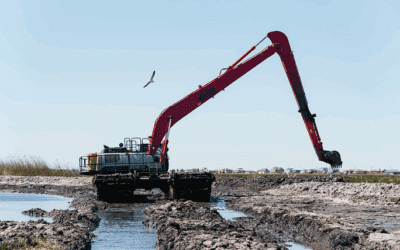
These programs heavily rely on amphibious excavators and marsh equipment that can operate in shallow water, peat, silt and saturated clay. As climate projects scale globally, they form one of the strongest pillars of amphibious equipment market trends in 2025.
2.2 Green Infrastructure and Habitat Restoration
Environmental restoration is a major opportunity area. Many nations now prioritize:
- Reconnecting wetlands for natural flood control
- Enhancing biodiversity in marshlands
- Rebuilding estuary systems
- Restoring natural sediment flow patterns
Amphibious equipment plays a central operational role in these long-term ecological programs. The future of the marsh equipment industry increasingly depends on the alignment between environmental policy, land stewardship, and sustainable construction practices.
2.3 Regulatory Changes and Environmental Permitting
Work in sensitive wetland zones requires compliance with:
- Soil disturbance limits
- Protected habitat regulations
- Seasonal activity windows
- Sediment control guidelines
This regulatory tightening influences equipment selection and operator training. Machines with lower footprint pressure, optimized hydraulic systems and reduced leakage risk become preferred choices. OEMs that adapt to these regulatory requirements align better with current procurement trends.
2.4 Technology Adoption and Equipment Modernization
Modern amphibious equipment integrates several advancements:
- GPS-guided dredging systems
- Hybrid-power modules
- Telematics for usage tracking
- Corrosion-resistant materials
- Modular pontoons and undercarriages
- High-efficiency hydraulic systems
These innovations drive better operational accuracy, reduced maintenance and improved safety. Contractors moving toward digital project management also expect machine compatibility with their workflow systems.
2.5 Increasing Demand From Private Sector Projects
Private developers initiate projects in hydropower, aquaculture, resource extraction and tourism infrastructure. These sectors require equipment capable of traversing unstable terrain and shallow waterways while minimizing environmental impact.
The result is a consistent increase in demand for amphibious machinery, including the use of an Amphibious Dredge Unit for support tasks, access road formation, boundary cleanup, vegetation control and channel creation.
3. Market Growth Drivers for 2025
Market growth in 2025 is driven by expanding climate-resilience projects, increased wetland restoration work, rising infrastructure needs in flooded regions and broader adoption of specialized machinery suited for saturated, low-stability environments.
3.1 Infrastructure Expansion
Countries expanding water-transport corridors, ports and inland navigation channels create continuous work for dredging and marsh equipment. This supports long-term equipment procurement cycles.
3.2 Urbanization Near Water Boundaries
As urban projects extend into wetlands and low-lying areas, developers rely on amphibious machines for:
- Piling preparation
- Soil stabilization
- Pre-development vegetation clearing
- Access routes for heavy construction
3.3 Government Resilience Funding
Policies focusing on long-term flood protection result in predictable budget allocations. Many nations operate multi-year climate adaptation frameworks, stabilizing equipment demand through 2030.
3.4 Growth of Environmental Services Sector
Environmental engineering firms continue expanding offerings in habitat restoration, marsh dredging and river maintenance. Their service models depend heavily on reliable amphibious machinery.
4. Technology Trends Shaping the Future of the Marsh Equipment Industry
Advancements in hybrid systems, telematics, precision hydraulics and corrosion-resistant materials are reshaping the marsh equipment industry, enabling higher efficiency, improved durability and better compliance with evolving environmental and operational requirements.
4.1 Shift to Hybrid and Low-Emission Equipment
Global efforts to reduce construction-site emissions influence equipment design. While full electrification of amphibious machinery faces challenges, hybrid systems and fuel-efficient engines are increasingly adopted.
4.2 Materials Engineering and Corrosion Prevention
Long exposure to brackish water and sediment accelerates component wear. New designs include:
- Reinforced pontoon bottoms
- Anti-corrosion coatings
- Improved seals and hoses
- Stainless-steel hardware in critical points
This extends machine service life and reduces downtime.
4.3 Automation and Digital Control Systems
Telematics and semi-autonomous features enhance productivity and safety. Users benefit from real-time data on:
- Machine load
- Operating hours
- Fuel consumption
- Hydraulic pressure
- Maintenance intervals
Digital integration positions the industry for more advanced fleet optimization.
5. Leading Applications Driving Equipment Demand
Demand for amphibious machinery continues to rise as contractors focus on efficient operations in wetlands, shallow waterways and unstable terrain, where equipment must provide reliable mobility, controlled excavation and minimal environmental disturbance.
5.1 Dredging and Sediment Control
Shallow-water dredging remains the top application, especially in rivers, drainage channels and irrigation systems.
5.2 Wetland and Habitat Restoration
Projects focused on biodiversity enhancement consistently use amphibious excavators for precision earthmoving.
5.3 Flood-Control Engineering
Regions prone to monsoon flooding or storm-related inundation rely on marsh equipment for clearing channels, strengthening embankments and managing siltation.
5.4 Coastal Zone Projects
Tasks include vegetation removal, shoreline reinforcement and tidal-flow management.
6. Market Segmentation by Equipment Type
| Equipment Type | Primary Use Cases | Market Trend in 2025 |
| Amphibious Excavators | Dredging, restoration, soil relocation | Strong growth due to climate adaptation |
| Marsh Buggies | Access mobility, transport | Increased use in soft-soil projects |
| Pontoon Undercarriages | Machine conversions | High demand for modular retrofits |
| Amphibious Carriers | Material movement | Moderate growth, tied to private sector |
| Low-Ground-Pressure Equipment | Construction access | Expanding with urban wetland development |
Conclusion
The amphibious equipment market in 2025 reflects a shift toward climate-resilient infrastructure, environmental restoration and technology-driven operations. Rising investment in wetland rehabilitation, coastal protection and inland waterway maintenance continues to shape equipment demand across global regions. Innovations in hybrid systems, corrosion-resistant materials and modular undercarriages further support long-term adoption.For investors, OEM partners and industry analysts, understanding these trends helps identify emerging opportunities and anticipate shifts in project requirements. For further information or technical guidance, contact us to discuss specific project needs.
Frequently Asked Questions
What is driving amphibious equipment market trends in 2025?
The main drivers include climate adaptation programs, wetland restoration, dredging operations, regulatory compliance and technological modernization.
Why is demand for amphibious machinery increasing?
Contractors require equipment that operates on saturated soil, shallow water and unstable terrain. Climate-resilience projects also expand the need for precision wetland-capable machinery.
Which sectors use amphibious equipment most?
Common sectors include dredging, environmental restoration, aquaculture, hydropower, flood-control engineering, and coastal infrastructure.
How does technology influence the future of the marsh equipment industry?
Hybrid engines, telematics, corrosion-resistant materials and GPS-guided systems increase performance, reduce maintenance and improve environmental compliance.
What regions show the strongest market growth for 2025?
Asia-Pacific leads in growth due to large-scale river management, aquaculture development and coastal zone projects. North America and Europe show strong steady demand.