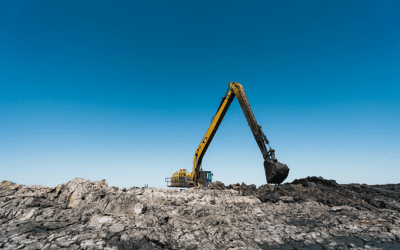
Digging with an excavator is more than just moving dirt. It is a craft where safety and solid preparation are the keys to executing a project successfully. Before an operator breaks ground, a disciplined approach is essential to keep personnel safe, the machine running efficiently, and the project on track.
Laying the Groundwork for Safe Excavator Operations
Every successful dig, from trenching for a pipeline to restoring a delicate wetland, starts long before the engine rumbles to life. This crucial stage involves careful planning and strict pre-operational checks. Overlooking this step can lead to equipment failure, costly delays, and serious accidents. Professional operators understand that effective digging is built on a foundation of methodical preparation.
The infographic here breaks down the vital workflow for any digging job.
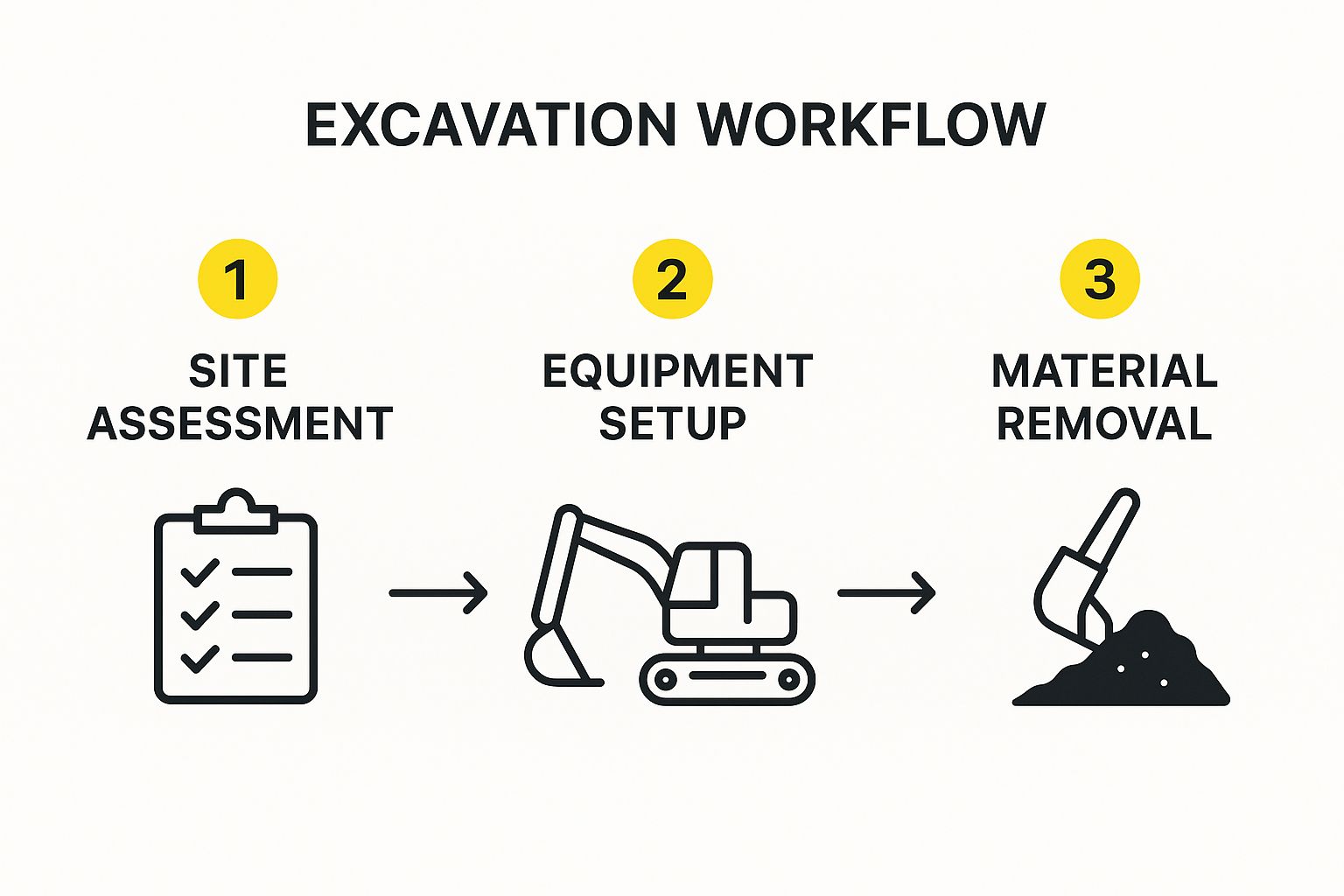
As you can see, moving material is the final piece of the puzzle. It only happens after a thorough site assessment and proper equipment setup.
The Daily Walk-Around: Your First Line of Defense
A walk-around inspection at the start of every shift is non-negotiable. This routine serves as the first line of defense against mechanical issues, allowing operators to spot small problems before they escalate into major failures that shut down the entire site.
Key inspection points include:
- Fluids: Ensure engine oil, hydraulic fluid, coolant, and fuel are at appropriate levels. Low fluid levels can cause critical components to overheat, leading to expensive repairs.
- Undercarriage & Tracks: Inspect tracks for loose bolts, significant wear, and proper tension. For amphibious excavators, it is crucial to check the pontoons and seals to confirm they are sound and watertight.
- Hydraulics: Scan every hose, cylinder, and connection for leaks. A hydraulic system failure under a heavy load is extremely dangerous. For specialized amphibious equipment, maintaining the hydraulic system is paramount.
- Controls & Safety Gear: Verify that all controls respond correctly and that the horn, backup alarm, and emergency shut-off are functioning properly.
Machine readiness is only one part of the equation. A firm grasp of overall site safety is equally important. For a valuable overview, review these essential construction site safety tips.
Reading the Terrain
Once the machine is confirmed to be in safe operating condition, it is time to assess the job site. Evaluate the ground stability, identify hidden slopes, and locate potential hazards. The most significant risk often lies underground. Accidentally striking a gas line or power cable can be catastrophic, so ensuring all utilities are properly marked is a mandatory first step.
Before you start any digging, a thorough pre-operational check is essential. This table outlines the critical points every operator should inspect to ensure the machine is safe and ready for the job.
| Component Area | Inspection Point | Status Check (OK / Needs Attention) |
|---|---|---|
| Engine Compartment | Engine Oil, Coolant, Fuel Levels | |
| Hydraulic System | Fluid Level, Hoses, Cylinders for Leaks | |
| Undercarriage | Track Tension, Rollers, Sprockets, Bolts | |
| Cab & Controls | Joystick/Lever Function, Horn, Alarms | |
| Safety Equipment | Fire Extinguisher, Emergency Shut-off | |
| Attachments | Bucket Teeth, Pins, Couplers |
Completing this checklist systematically ensures all bases are covered before putting the machine to work, minimizing risks for everyone on site.
Taking just 15-20 minutes for these checks can be the difference between a smooth day and days of unscheduled downtime. It is an investment that always pays off.
The demand for skilled operators who prioritize these practices is growing. The global excavator market reached USD 75.85 billion in 2023 and continues to expand, highlighting the central role these machines play in modern construction and development. This growth reinforces the importance of mastering safe and efficient operating procedures.
Positioning Your Excavator for Peak Performance
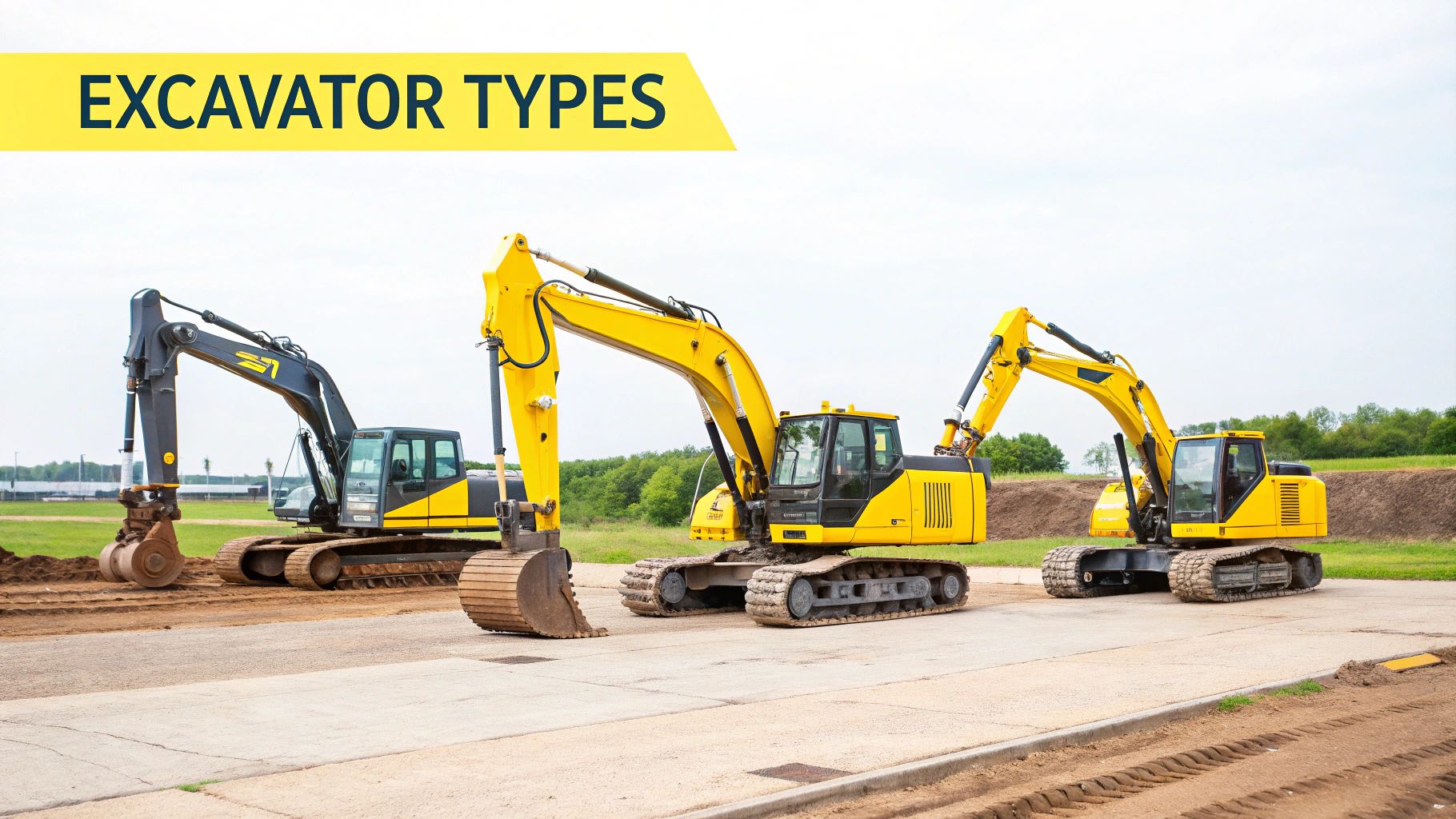
Where an excavator is placed is one of the most critical decisions on any job site. This single choice directly impacts digging power, stability, and operational efficiency. A poorly positioned machine must work harder, burning more fuel and suffering unnecessary wear and tear while increasing the risk of an accident.
The fundamental rule is to always work from a level, stable base. This is not just for operator comfort, it is a matter of safety and mechanical advantage. When an excavator sits on uneven ground, its center of gravity shifts, compromising stability. This is especially dangerous when swinging a fully loaded bucket at maximum reach.
Even a minor slope can significantly reduce a machine’s breakout force. It is always worth taking a few extra minutes to grade a level pad for the tracks. That simple step ensures the excavator’s power is directed into the ground, not into a battle with gravity.
Aligning the Undercarriage for Maximum Force
A common mistake among operators is failing to orient the undercarriage correctly for the dig. For maximum digging power, the tracks should run parallel to the trench or face being worked on.
Digging over the side of the tracks makes the machine inherently less stable. When dealing with tough ground or a heavy lift, an operator should always position the work over the front or rear of the undercarriage. This setup uses the full length of the machine for maximum stability.
An operator who understands how the undercarriage, center of gravity, and boom orientation work together can reduce cycle times by 10-15%. That is a huge boost in efficiency that comes from working smarter, not just faster.
In challenging terrains like swamps or marshes, maintaining a stable base becomes the primary objective. A standard excavator will sink, rendering it useless. This is where specialized equipment is necessary. For any project on saturated or submerged ground, professionals rely on the stability of amphibious hydraulic undercarriages. Their wide, buoyant pontoons distribute the machine’s weight, creating a solid platform where conventional equipment would be hopelessly stuck.
Practical Setups for Common Digging Tasks
The right position depends entirely on the task. The setup for bulk earthmoving is completely different from the approach for precision trenching.
Consider these common applications:
- Bulk Earthmoving: Position the machine on a bench slightly above the truck being loaded. This allows gravity to assist the swing, saving a surprising amount of fuel and shaving seconds off every cycle. The goal is a setup that requires minimal track movement, allowing for digging and loading from one spot.
- Trenching: When digging a trench, always keep the tracks parallel to the line. This allows for a smooth, straight cut and provides the best stability when extending the boom and stick. It also makes it easier to cast the spoil pile evenly to one side without constantly repositioning the machine.
Mastering these positioning strategies makes every movement more effective. You will reduce stress on the machine and see a real difference in your productivity on any site.
Mastering Fundamental Excavator Digging Techniques
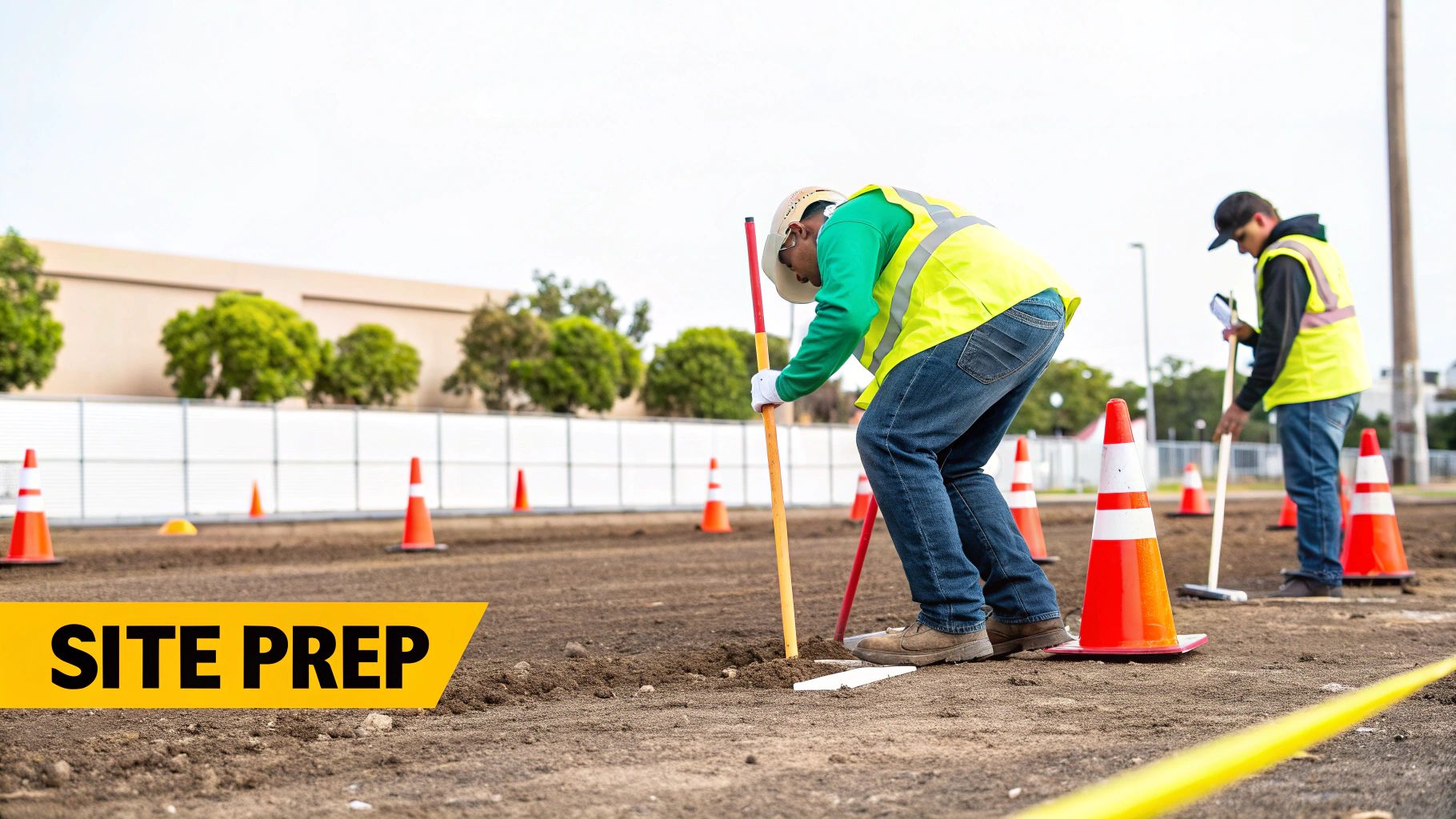
Becoming comfortable with the controls is one thing, but becoming a truly skilled operator is another. The difference between a novice and a professional lies in mastering the fundamental digging techniques that boost efficiency, reduce fuel costs, and produce a clean, professional finish. It is about making every movement count, whether moving mountains of dirt or carefully exposing a fragile utility line.
The first and most critical skill is achieving a full bucket on every pass. This involves a smooth “scooping” motion, not just dragging the bucket through the ground. A seasoned operator coordinates the boom, stick, and bucket in one fluid movement. As the stick is pulled in, the bucket is curled, filling it to capacity without putting extra strain on the machine. This seamless rhythm is the key to faster cycle times and less equipment wear.
Trenching and Sloping Best Practices
Digging a straight trench with consistent depth is the signature of a professional. This requires keeping the tracks perfectly parallel to the trench line and relying on controlled, subtle movements. Jerky actions will result in uneven walls and a wavy trench bottom, wasting time on corrective work.
When digging deeper, safety becomes the top priority. Creating sloped or “benched” walls is essential to prevent dangerous cave-ins. This involves cutting the trench walls back at a safe angle to maintain their stability.
- Hold Your Grade: Use grade stakes or a laser level as a guide. This is the only way to guarantee the correct depth is maintained from one end of the trench to the other.
- Dig Straight: Pick a point in the distance and keep the machine aimed at it. This simple trick helps cut a perfectly straight line without drifting.
- Know Your Slopes: The correct slope angle depends entirely on the soil type. Looser, sandy soils require a much gentler incline than stable clay to prevent collapse.
An operator who masters smooth, efficient control can cut fuel consumption by as much as 20%. That efficiency comes from eliminating harsh stops and starts that put unnecessary stress on the hydraulics and engine.
Managing Spoil Piles and Precision Digging
A clean, safe job site starts with smart spoil pile management. The excavated material should be placed far enough from the trench to prevent it from sliding back in but close enough for easy backfilling. A well-placed pile also keeps pathways clear for other equipment and ground personnel.
This task is very different from the delicate touch required when digging around utilities. Precision work demands a different mindset. It is slow, methodical, and relies on feeling for the slightest change in ground resistance through the controls. Many operators will use a smooth-edged bucket to avoid puncturing a pipe or slicing a cable. In fact, many projects now demand specific tools for this sensitive work, demonstrating the importance of having the right attachments.
Ultimately, mastering these techniques is what elevates excavator work from a basic task to a true craft. Smoothness, precision, and the ability to think ahead are what separate the experts from the rest, ensuring every job is done safely, efficiently, and to the highest possible standard.
Digging Where Others Can’t: Mastering Tough Environments
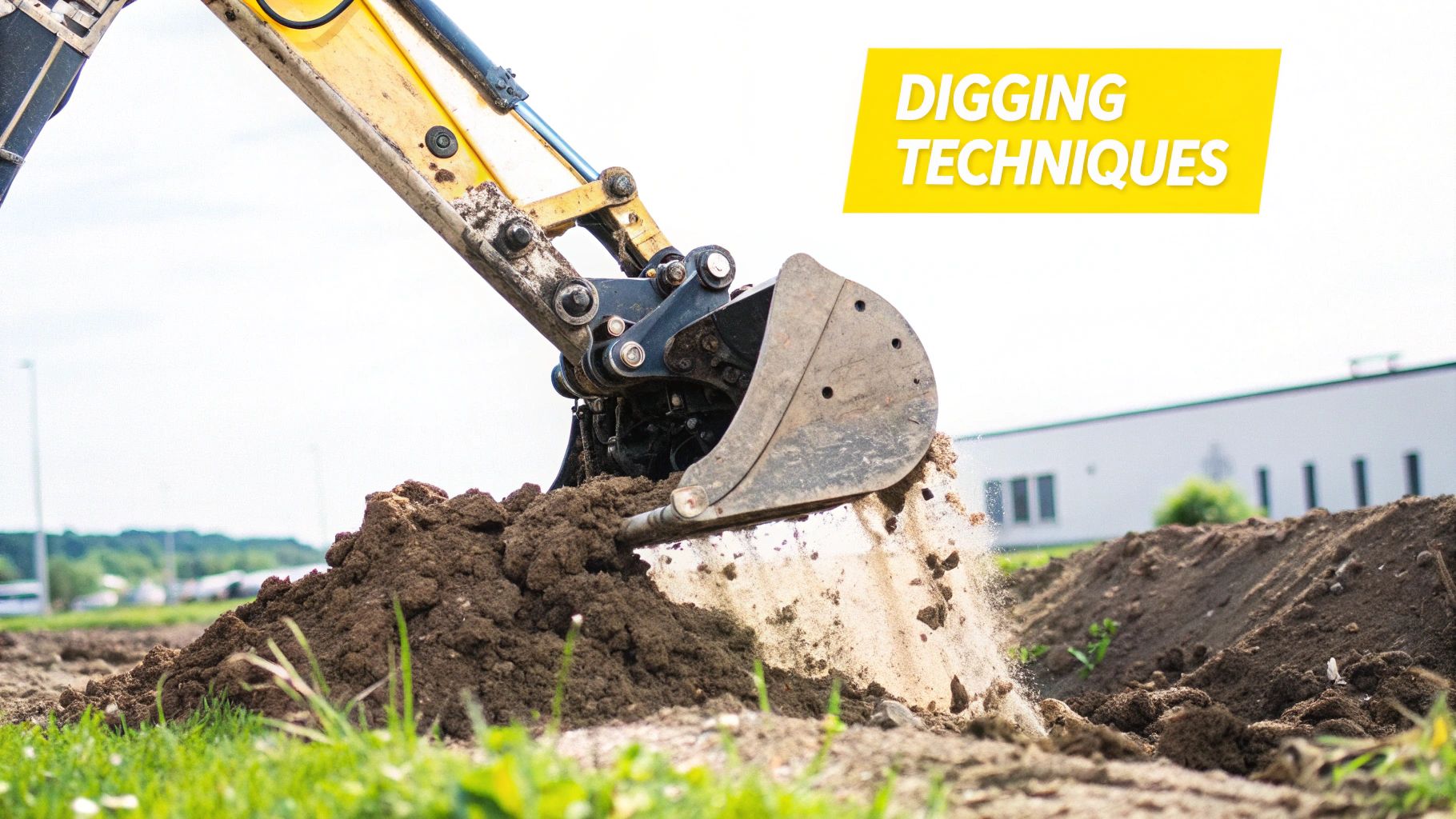
The standard digging playbook works perfectly on solid ground. But the moment you encounter a wetland, swamp, or coastal marsh, those methods become obsolete. Conventional heavy equipment will sink, bogging down the project and causing significant environmental harm.
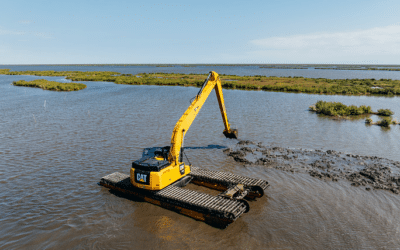
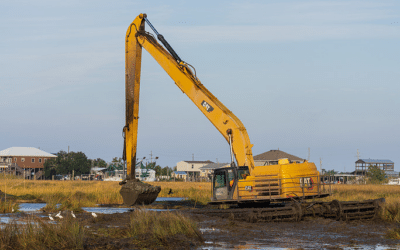
This is precisely where amphibious excavators excel. They are not just regular machines with bigger tracks, they are engineered to turn impossible jobs into manageable ones. With buoyant pontoon undercarriages, they float across water and glide over soft mud while exerting minimal ground pressure. Suddenly, projects that were once off-limits, like dredging shallow waterways or restoring sensitive ecosystems, become achievable.
Adapting Your Skills for Amphibious Work
Operating an amphibious excavator is a unique challenge. It is less about brute force and more about finesse. The operator must constantly manage the machine’s stability and buoyancy on a surface that is always shifting. It requires a delicate balance between the machine, the water, and the mud.
A seasoned operator learns to “walk” or “spud” the machine through deeper water, using the boom and stick to propel and position it. Beyond operator skill, the right attachments are what make these machines truly effective.
- Long-Reach Booms: Essential for dredging a channel or cleaning out a large pond from a single, stable position. This saves a massive amount of time that would otherwise be spent repositioning.
- Clamshell Buckets: The go-to tool for removing sediment or contaminated soil with surgical precision and minimal water disturbance.
- Vegetation Cutters: Perfect for clearing dense, overgrown waterways before digging begins, providing a clear line of sight.
The real advantage of an amphibious excavator is not just that it can float. It is that it makes previously impossible projects, like running a pipeline through a swamp, entirely doable.
A Real-World Example: Turning the Tide on a Marsh Restoration
Imagine a land reclamation project in a coastal marsh, completely inaccessible to heavy equipment. The objective was to dredge built-up silt to restore natural water flow, a vital task for the local ecosystem’s health. The initial attempt to use standard excavators on mats failed because the ground was simply too soft. The machines quickly sank.
The contractor then brought in a Wilco amphibious excavator, which navigated directly to the heart of the dredging site. Equipped with a long-reach boom and a specialized environmental clamshell bucket, the operator methodically removed the silt without disturbing the surrounding vegetation.
The project was completed ahead of schedule and under budget, proving the immense value of using the right machine for the job. This capability is only becoming more important as infrastructure projects expand globally. According to ResearchAndMarkets.com, rapid growth in sectors like highway construction underscores the critical need for machines that can conquer any terrain a project presents.
How Modern Tech Can Make a Good Operator Great
The best operators combine a natural feel for their machine with the incredible technology packed into modern excavators. Today’s excavators are about more than just raw hydraulic power. The cab is more like a cockpit, filled with systems designed to complete the job with more precision and safety than ever before.
Gone are the days of constant guesswork and relying solely on grade stakes. Technology like grade control and GPS means you dig exactly to plan the first time. This slashes rework, saves time, and cuts down on material waste. When an operator can see the bucket’s exact position relative to the target grade in real-time, every movement counts.
Nail Your Grade Every Time with GPS and Control Systems
Grade control systems are a game-changer, especially for jobs that demand tight tolerances like laying pipe or pouring a foundation. Using a combination of sensors on the boom, stick, and bucket, the system shows the precise location of the bucket teeth in relation to the design elevation on an in-cab screen.
- 2D Systems: Perfect for simpler, consistent grades, such as digging a flat pad or a trench with a constant slope. They typically work with a rotating laser to maintain accuracy.
- 3D Systems: For complex site plans with varied contours, 3D systems use GPS and pre-loaded digital designs. The operator is essentially sculpting the earth based on a live 3D model, without waiting for a surveyor to place more stakes.
Getting the grade right the first time means less over-digging, which saves a fortune on backfill material and ultimately gets the project finished faster.
On-site observations show that crews using grade control technology can see a productivity jump of up to 50% on grading and excavation. That is the power of getting it right the first time.
Use Telematics to Keep Your Machines in the Fight
Beyond the immediate work, telematics provides a comprehensive overview of fleet health. The system constantly feeds data back to the office, offering a live look at how equipment is performing in the field.
Think of it as a constant health check-up. Telematics tracks everything, including engine hours, fuel burn, idle time, and any diagnostic fault codes. This information is invaluable for a maintenance team. They can spot a small issue before it becomes a catastrophic, project-stopping failure. It is all about shifting from reactive repairs to proactive maintenance that keeps your equipment running and extends its life.
This push for smarter, more efficient equipment is a major reason the excavator market is booming. It is expected to climb from around USD 85 billion to nearly USD 129.7 billion by 2035. As the industry moves toward achieving more with less, embracing these tools is not just about improving your digging, it is about strengthening your entire business. You can dive deeper into these market trends in this analysis on OpenPR.com.
Your Partner for Complex Excavation Projects
This guide has covered a lot of ground, from the fundamentals of preparation to the finer points of skilled excavator operation. The key takeaways are straightforward. Successful digging is a combination of meticulous site assessment, practiced technique, and the right equipment for the job. Smooth, controlled movements are not just for show, they save fuel, reduce machine wear, and produce a higher quality finish.
But what happens when the project is anything but straightforward? For the most demanding jobs, especially those in swamps, marshes, or other unstable environments, the right partner becomes just as crucial as the right machine. These are the projects that test the limits of conventional methods and demand a different level of expertise.
Beyond Equipment: A Solution-Focused Partnership
At Wilco Manufacturing, we do not just sell equipment. We are a solutions partner, ready to help you tackle the toughest site challenges. Our team has decades of hands-on experience in industries from pipeline installation to environmental cleanup, so we understand the real-world pressures you face. Our guidance goes far beyond a simple transaction.
When your project calls for specialized machinery and the insight to use it effectively, our team is ready to help you find the perfect fit.
- Equipment Purchase: We can walk you through selecting the ideal amphibious excavator or undercarriage for your long-term operational needs.
- Flexible Rentals: Have a one-off job or a short-term need? Our rental fleet gives you access to specialized gear without the major capital investment.
- Custom Engineering: If an off-the-shelf solution will not work, we have the capability to design and build a custom machine tailored precisely to your project’s specifications.
Choosing the right equipment partner is not just about the machine. It is about gaining a knowledge base that helps you anticipate challenges, work more efficiently, and ensure project success before you even break ground.
Integrating Expertise for Future Projects
Looking ahead, complex excavation will only become more sophisticated. Success on large-scale infrastructure developments will depend on combining robust machinery with smart, forward-thinking planning. This involves everything from advanced equipment to new methods for site surveying and monitoring, like the growing use of drones transforming infrastructure projects for aerial assessments.
This is the mindset we bring to every conversation. We help you pair world-class amphibious technology with practical, field-tested expertise so your team is ready for whatever the job throws at them. Whether you are digging in a swamp, dredging a waterway, or reclaiming land, having a partner who truly understands the nuances of that work is invaluable.
The core principles of digging with an excavator do not change. But when the ground beneath your tracks is no longer solid, your choice of equipment and support can make all the difference.
When your next project involves challenging terrain, trust the experts. Contact Wilco Manufacturing today to discuss your equipment needs and discover how our amphibious solutions can get the job done right. Learn more at https://wilcomfg.com.