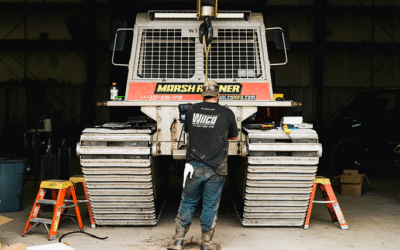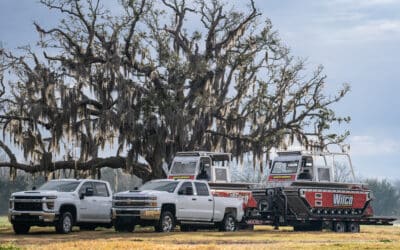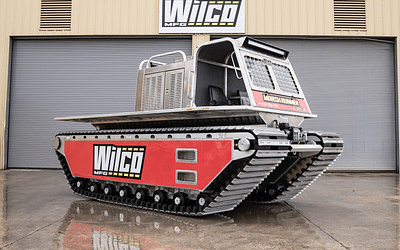
At its core, an excavator is a foundational workhorse on any major job site, equally skilled at digging, demolition, handling heavy materials, and even delicate landscaping. From bustling city construction zones to remote environmental cleanup projects, this machine handles everything from massive earthmoving to precise, detailed work with the right attachment. For decision-makers in industries like dredging, construction, and environmental restoration, understanding its capabilities, especially in amphibious form, is key to solving complex project challenges.
This guide explores the diverse applications of excavators, highlighting how specialized models like amphibious excavators provide actionable solutions for projects on unstable or saturated ground.
The Fundamental Role of an Excavator
An excavator is far more than just a digging machine. While its primary job is moving large volumes of earth, its real power comes from its incredible adaptability. The combination of a powerful hydraulic system, a fully rotating cab, and its boom-and-arm setup allows it to perform the work of several machines and an entire crew.
Modern advancements have created a family of specialized machines. It’s no surprise the global excavator market was valued at USD 75.85 billion in 2023 and is projected to grow. This growth is driven not just by construction, but by the development of specialized excavators for nearly any job imaginable, from compact units for tight spaces to massive machines for mining.
Understanding Excavator Sizes
The size of an excavator is directly tied to its power, and matching the right machine to the job is a critical first step. A mini excavator, for instance, is ideal for residential landscaping, but a commercial building foundation requires a standard-sized model for efficient excavation.
This infographic gives you a quick visual comparison between mini and standard excavators, focusing on their weight and how much they can carry in their bucket.
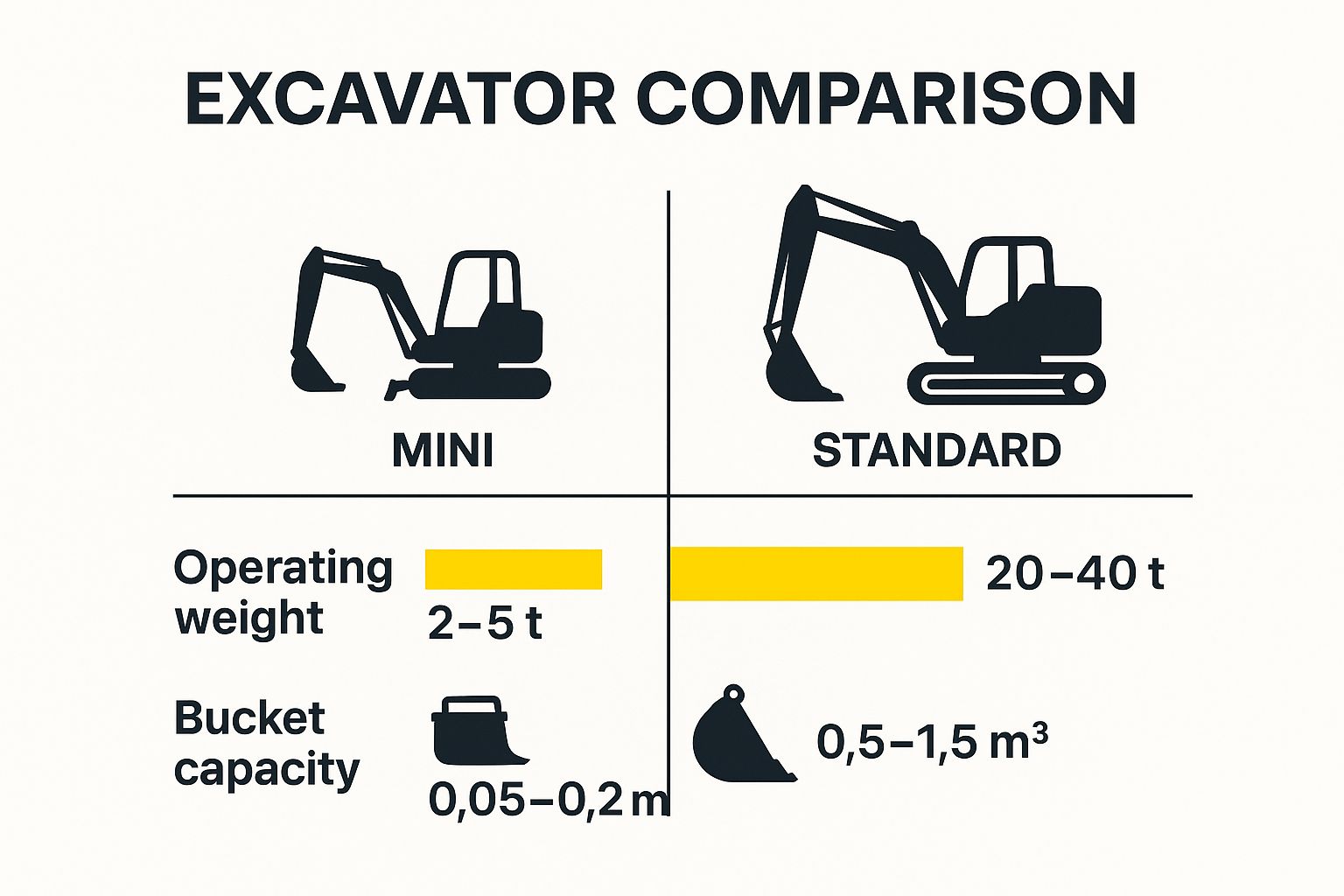
As you can see, the jump from a mini to a standard model is significant. It highlights why selecting the right size from the start is critical for project efficiency and safety. But what happens when the ground isn’t solid?
Standard excavators cover most dry-land jobs, but they become ineffective when faced with wetlands, swamps, or shallow water.
The greatest weakness of a conventional excavator is its complete dependence on stable, dry ground. The moment it encounters saturated soil, marshland, or a waterway, it becomes inoperable. This not only causes expensive delays but also creates serious safety hazards.
This is precisely where amphibious excavators, a core specialty of Wilco Manufacturing, provide a solution. Instead of traditional tracks, these machines are built on a specialized pontoon undercarriage that allows them to float and work in environments where standard equipment would immediately get stuck or sink.
Here’s a quick breakdown of where each type of machine shines.
Standard vs Amphibious Excavator Capabilities
| Feature | Standard Excavators | Amphibious Excavators |
|---|---|---|
| Ideal Terrain | Firm soil, gravel, rock, paved surfaces | Swamps, marshlands, wetlands, shallow water, dredging sites |
| Undercarriage | Steel or rubber tracks | Sealed pontoons with track chains |
| Primary Limitation | Cannot operate in water or on saturated, unstable ground | Less efficient on hard, dry surfaces; requires transport |
| Key Advantage | High power-to-weight ratio for dry earthmoving | Ability to float and navigate through soft, wet environments |
Essentially, when the job site looks more like a waterway than a construction lot, you need a machine engineered for aquatic environments. You can explore a variety of amphibious excavator models to see how these machines are designed to conquer the most challenging, waterlogged conditions.
Excavator Uses in Construction and Earthmoving
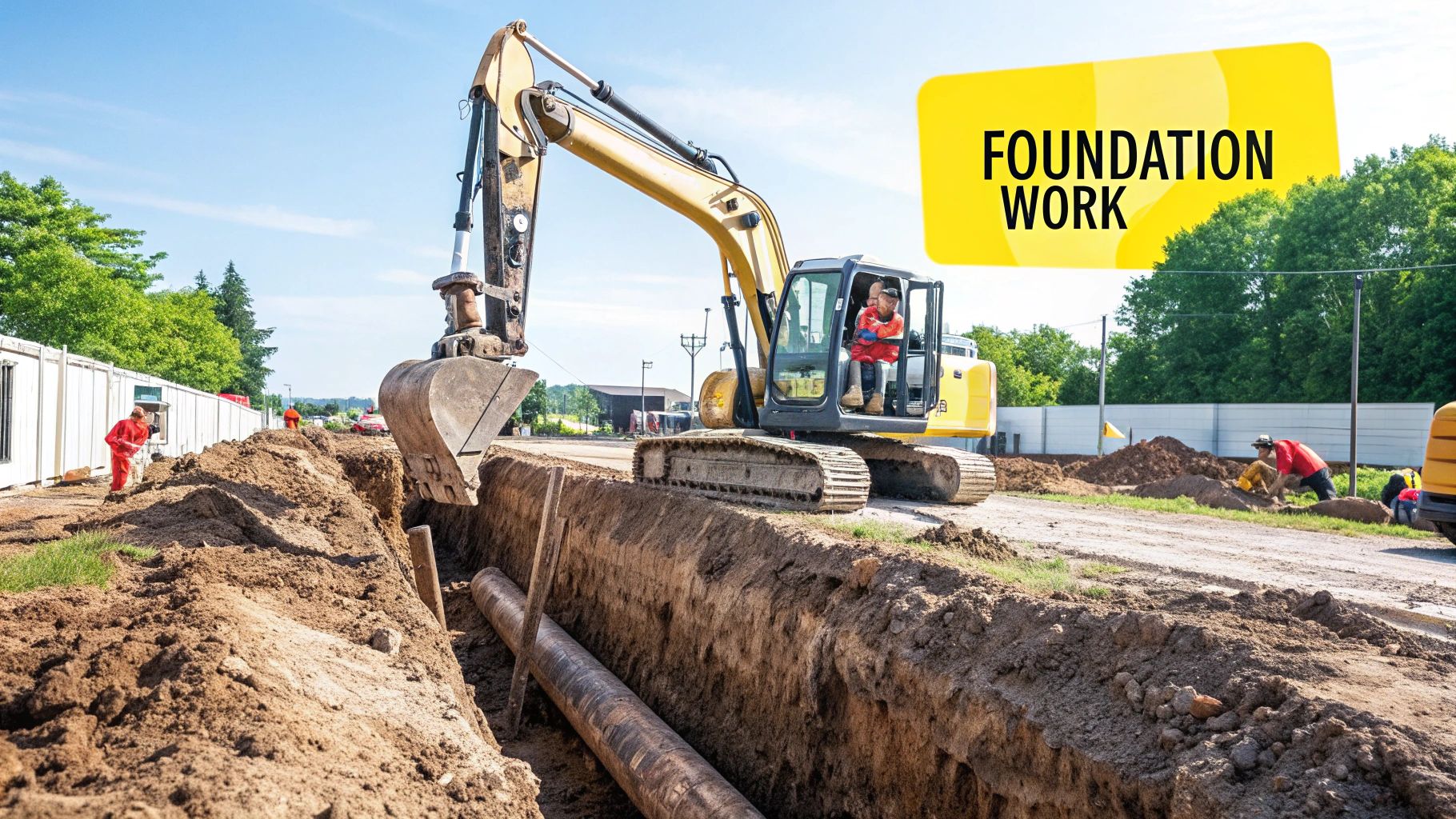
In construction, the excavator is the backbone of any earthmoving operation, performing tasks from carving out massive foundations for skyscrapers to digging precise trenches for utility lines. It functions less like a blunt instrument and more like a powerful, multi-purpose tool.
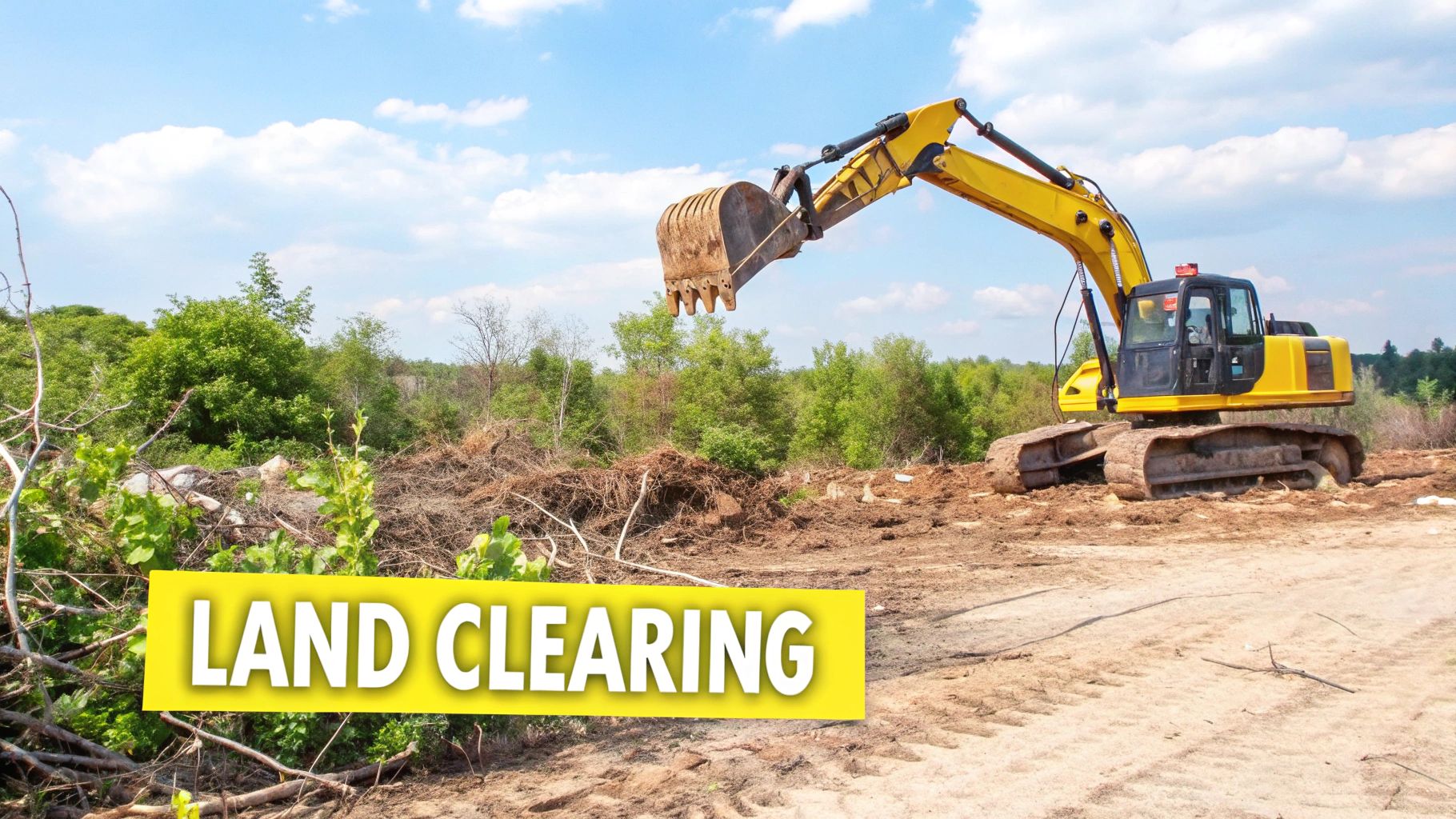
From the moment a project breaks ground, an excavator is on site. It clears the land, grades the terrain to ensure proper drainage, and excavates basements and foundations. Later, it might be used to create roadbeds or move massive amounts of soil and rock. Its versatility makes it indispensable.
Excavators have been at the heart of major infrastructure projects for decades. Consider the recent push for modernization in places like India, where national highway construction jumped by over 300% in the 2021–2022 fiscal year alone. That kind of progress is impossible without fleets of heavy machinery. For more details on the equipment behind these global trends, you can review this excavator market report.
Common On-Site Challenges
Despite their power, traditional excavators have a critical weakness, they need solid ground to work. A high water table or saturated soil can bring a multi-million dollar project to a halt.
Project managers frequently encounter these challenges:
- High Water Tables: Digging a few feet down can cause the excavation to fill with water, turning stable ground into mud and rendering a heavy excavator useless.
- Unstable or Saturated Soil: After heavy rain, clay or silt soils can become a swamp. Standard tracks lose all traction, and the machine becomes stranded.
- Unexpected Flooding: A sudden downpour or a rising river can flood an entire site overnight, making it completely inaccessible to standard equipment.
When these situations occur, crews resort to expensive workarounds like pumping out water or bringing in tons of rock to build temporary roads. Both solutions cost money and, more importantly, valuable time.
The Amphibious Advantage in Construction
This is exactly the kind of situation where an amphibious excavator proves its value. Instead of pausing work and watching the budget inflate, these machines keep the project moving forward.
An amphibious excavator eliminates the need for expensive site preparation in wet environments. It can traverse saturated ground, cross shallow waterways, and continue essential tasks like trenching and grading without delay, keeping the project on schedule and within budget.
By using a buoyant, pontoon-style undercarriage instead of conventional tracks, a construction team can navigate the very conditions that would sideline a standard machine. This capability is a game-changer for any project dealing with soggy, unpredictable terrain, turning a major obstacle into a manageable task.
High-Impact Applications in Demolition and Mining
Beyond typical construction sites, excavators tackle some of the toughest jobs on the planet. Demolition and mining are two prime examples, fields that demand a blend of brute force and precision. Here, an excavator is not just a digging machine, it is a multi-tool powerhouse.
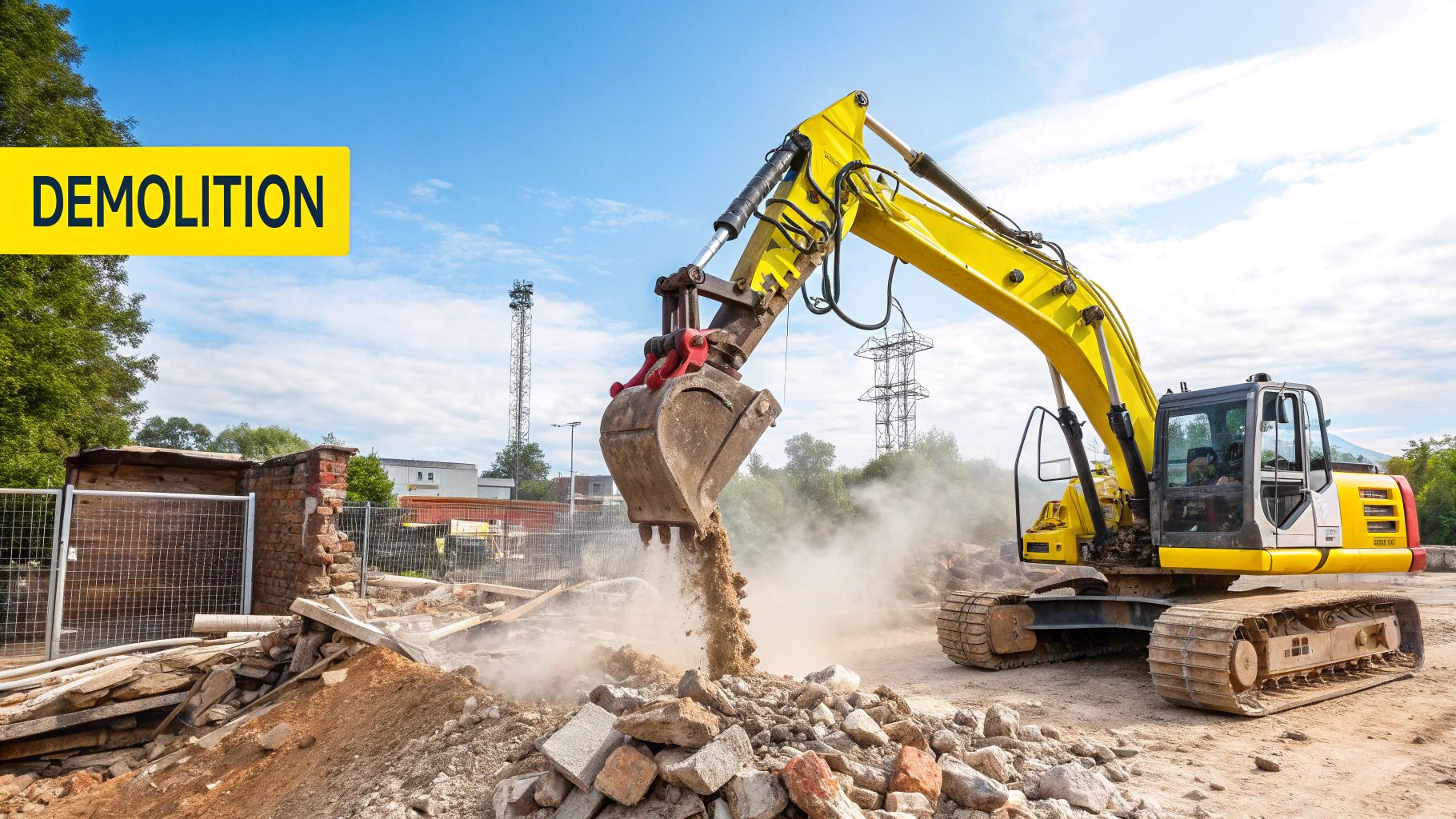
In demolition, the right attachment transforms an excavator into a specialized dismantling tool. Fitted with hydraulic hammers, pulverizers, or massive shears, it can methodically tear down concrete structures, cut through steel rebar, and sort the resulting debris for recycling. This approach allows operators to bring down buildings with control from a safe distance. The machine’s long reach and stable base are key to managing how and where debris falls, protecting the crew and nearby properties.
The Role of Excavators in Mining Operations
Mining operations are defined by scale. In massive open-pit mines, excavators are the workhorses responsible for removing tons of overburden, the layer of rock and soil covering mineral deposits. Once the valuable ore is exposed, these same machines load colossal haul trucks in a relentless cycle that is crucial to a mine’s profitability.
This industrial might is a significant reason why excavators are so vital globally. The Asia Pacific region currently dominates the market with a 43.2% share, driven by incredible rates of industrial growth. If you are interested in the global trends shaping equipment design, this comprehensive market analysis from IMARC Group offers a deeper look.
Overcoming Extreme Environmental Challenges
Both demolition and mining sites are notorious for difficult environmental challenges. A demolition project near a waterway can become a flooded mess, and a mining pit can fill with groundwater after heavy rain, shutting down work entirely. In mining, one of the biggest challenges is managing tailing ponds, which are vast pools of slurry completely impassable for standard heavy equipment.
When a mining pit floods or a demolition zone is submerged, conventional machinery becomes a liability. Amphibious excavators turn these hazardous, water-filled environments into manageable workspaces, allowing for debris removal or tailing pond maintenance without the need for dewatering.
This is precisely where an amphibious excavator shines. Its unique pontoon undercarriage allows it to float and navigate through a flooded pit or the soupy mix of a tailing pond. This completely sidesteps the costly and time-consuming process of pumping out water. For these high-stakes industries, having amphibious equipment means the job gets done safely and on schedule, regardless of the conditions.
Solving Challenges in Dredging and Land Reclamation
Beyond solid ground lies the specialized world of dredging and land reclamation, an environment where a standard excavator is completely useless. In these situations, an amphibious excavator is not just a better choice, it is often the only practical solution.
Dredging is essential for maintaining our waterways. It involves removing sediment, silt, and debris from the bottom of rivers, harbors, and canals. Without regular dredging, shipping channels would become impassable, natural water flow would be disrupted, and the risk of flooding would increase.
Historically, dredging was a cumbersome operation involving barges and long-reach excavators. The process was slow, logistically complex, and often left a significant environmental footprint. Amphibious excavators from Wilco Manufacturing rewrite the playbook by operating directly in the water.
A New Approach to Dredging Operations
An amphibious excavator can navigate shallow waterways and marshlands on its own. Its buoyant pontoon undercarriage eliminates the need for a separate barge. This unique capability makes it one of the most effective pieces of equipment for dredging available today.
The advantages are immediately clear:
- Reduced Mobilization Costs: Eliminating the need to transport and set up a separate barge saves a significant amount of time and money.
- Unmatched Access: These machines can reach tight, shallow areas where a barge could never operate.
- Lower Environmental Impact: By working directly at the source, they cause far less disruption to the seabed and surrounding aquatic habitats.
The ability to operate directly in the water transforms dredging from a complex marine operation into a streamlined earthmoving task. This is what an excavator is used for in modern waterway maintenance, offering a solution that is both economically and environmentally sound.
The Role of Amphibious Excavators in Land Reclamation
Land reclamation involves creating new land from oceans, rivers, or lakes. The work takes place on soft, saturated, and completely unstable ground where a conventional excavator, with its heavy steel tracks, would sink instantly.
Here, the design of the amphibious undercarriage is critical. The massive pontoons spread the machine’s weight over a large surface area, creating extremely low ground pressure. This allows the excavator to “float” across mudflats and saturated soil that would not even support a person’s weight.
For a land reclamation project, this is a game-changer. The machine can move dredged material, sculpt new coastlines, and build containment dikes while positioned directly on the unstable, newly formed terrain. It is the perfect tool for turning a submerged area or an unusable wetland into valuable, stable ground for development or habitat restoration projects.
Navigating Environmental and Pipeline Projects
Not all excavation work is about brute force. Some projects demand a more delicate touch, where precision is as crucial as power. This is especially true for environmental remediation and pipeline installation, where the wrong machine can cause catastrophic damage and expensive delays.
In these sensitive environments, a standard excavator is often too heavy and clumsy. Its tracks would churn up fragile ground, destroy habitats, and inevitably get bogged down in the waterlogged soil of wetlands and riverbanks. This is where amphibious models from an authority like Wilco Manufacturing become the essential tool for getting the job done right.
A Low-Impact Solution for Environmental Remediation
Consider the challenges of an environmental cleanup, which often takes place in vulnerable ecosystems. Tasks like removing contaminated sediment from a riverbed, restoring an eroded shoreline, or clearing invasive plants from a protected marsh require delicate work.
An amphibious excavator is perfectly suited for these tasks. Since it can float and move through shallow water, there is no need to build temporary access roads that would damage the very habitat being restored. The machine’s weight is spread evenly across its pontoon undercarriage, creating very low ground pressure. This allows it to work directly on soft soil without sinking or leaving a massive footprint, resulting in a cleaner, faster, and more effective remediation.
Conquering Challenges in Pipeline Installation
Laying a pipeline is a massive logistical puzzle that becomes infinitely more complex when the route crosses a swamp, marsh, or river. Conventional heavy equipment cannot operate in these areas, forcing crews to use expensive and time-consuming workarounds like dewatering large sections of land or building temporary crossings.
In pipeline projects, crossing a single swamp can bring the entire operation to a halt. An amphibious excavator is purpose-built for these environments, allowing crews to dig trenches and lay pipe directly in saturated ground, ensuring adherence to strict environmental regulations and project timelines.
Amphibious excavators and marsh buggies are the industry’s go-to solution for these exact problems. They navigate directly through waterlogged terrain, keeping the project on schedule while avoiding the environmental harm caused by other methods. This ability is a game-changer in the energy sector, where both efficiency and regulatory compliance are non-negotiable.
If you’re facing tough terrain, exploring the versatility of marsh buggies beyond wetlands can open up even more solutions. At Wilco Manufacturing, we design equipment that turns these obstacles into workable sites, helping our clients in the environmental and energy fields tackle their toughest challenges.
How to Choose the Right Excavator for Your Job
Selecting the right heavy equipment is a make-or-break decision for any project manager. The right choice keeps a project on track, while the wrong one can lead to serious delays and budget overruns. The choice between a standard excavator and a specialized amphibious model is not just about power, it is about matching the machine’s strengths to the reality of your job site.
The first step is always a thorough site assessment. It is crucial to look past the work order and understand the terrain. Is the ground solid and dry year-round? Is there a chance of seasonal flooding or a high water table? Answering these questions upfront is the foundation of a solid equipment strategy.
Making the Right Decision
On firm, dry land, a conventional excavator is the workhorse of choice. Nothing beats its efficiency for standard earthmoving tasks in those situations.
However, the moment a project involves saturated soil, wetlands, or shallow water, the entire dynamic changes. That is the clear threshold where an amphibious excavator transitions from a specialty item to an absolute necessity.
Consider these key factors:
- Soil Stability: If the ground is too soft to support the weight of a standard machine, you will get stuck. An amphibious model’s low ground pressure is specifically designed to float over terrain that would swallow conventional equipment.
- Water Presence: Any job that involves working directly in a river, marsh, or flooded zone makes an amphibious excavator the only practical tool. It saves you from the massive expense and hassle of building cofferdams or bringing in barges.
- Accessibility: For remote sites isolated by swamps or marshland, an amphibious machine can often travel directly to the job. This alone can save a fortune by eliminating the need to build miles of temporary access roads.
Choosing the right excavator is a strategic decision that directly impacts project efficiency, safety, and profitability. Underestimating the challenges of a waterlogged site will lead to significant downtime and budget overruns.
Ultimately, the decision comes down to a simple risk assessment. A standard excavator might seem sufficient on paper, but if there is any realistic chance of encountering wet conditions, an amphibious unit is your insurance policy against project-killing delays. Whether you are ready to buy or exploring flexible options like amphibious excavators for rent, getting an expert opinion is crucial.
At Wilco Manufacturing, our team has helped clients match equipment to their projects for decades. We have seen it all, and we can help you navigate these critical decisions to ensure you have the right machine to conquer any challenge your job site presents.
Frequently Asked Questions About Excavators
When planning a complex project, selecting the right machine is everything. Here are a few common questions we hear from project managers navigating their equipment options.
Standard vs. Amphibious Excavators
What is the real difference between a standard excavator and an amphibious one? It all comes down to the undercarriage.
A standard excavator has a traditional undercarriage with steel tracks, perfect for solid, dry ground. An amphibious machine is a different beast entirely. It sits on a set of buoyant, sealed pontoons equipped with track chains. This design is what allows it to float and navigate through swamps, marshland, and saturated soil where a conventional excavator would become stuck instantly.
Attachment Compatibility on Amphibious Models
Project managers often ask if they can use their existing attachments on an amphibious model. The short answer is, generally, yes. Most standard attachments like buckets, hydraulic hammers, and grapples will fit.
The key, however, is to carefully match the attachment’s weight and hydraulic requirements with the machine’s specifications. This is absolutely critical for maintaining balance and stability, especially when the excavator is floating. You should always consult an expert to ensure the pairing is safe and effective before beginning work.
Environmental Project Advantages
For sensitive environmental jobs, amphibious excavators are a game-changer. They tread lightly on soft terrain, which means minimal soil disturbance and habitat damage.
By working directly on the water, you eliminate the need for temporary access roads or causeways. This dramatically reduces sediment disruption and protects aquatic ecosystems. It is a low-impact approach that is essential for projects like wetland restoration or contaminated sediment removal, helping you stay compliant with tough environmental regulations.
When your project takes you where standard equipment cannot go, you need an equipment partner with proven expertise. The specialists at Wilco Manufacturing have spent decades engineering solutions for the toughest job sites on Earth.
Let’s discuss the challenges you are facing. Contact our team today to find the right equipment for your project needs.