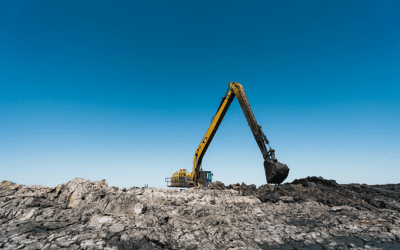
When you mount a specialized mulching head onto an excavator, you create a powerful, precise tool for shredding dense vegetation right where it stands. This setup is not just an attachment; it is a game-changer for project managers in land clearing, site preparation, and environmental management. It transforms a standard excavator into a high-performance clearing machine capable of tackling the toughest jobs.
Transforming Land Clearing With Powerful Technology
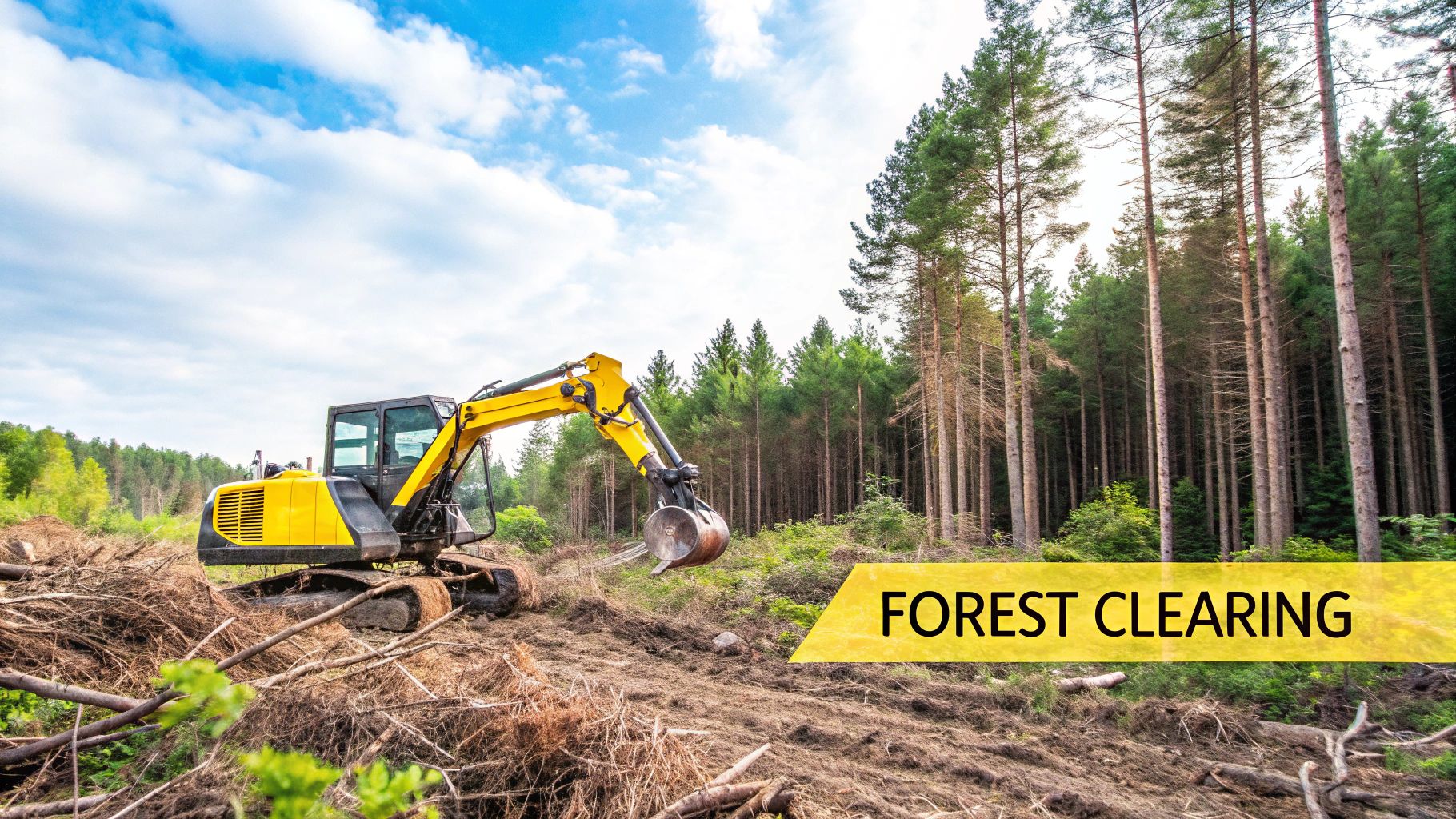
Think of an excavator forestry mulcher as the perfect marriage of a wood chipper's brute force and an excavator's surgical precision. This combination allows operators to reach over obstacles, clear steep slopes, and selectively remove unwanted growth without disturbing the surrounding terrain.
It is a practical solution to some of the most difficult challenges in land management. Instead of the traditional method of cutting, piling, and hauling debris, this single machine fells, shreds, and spreads organic material back into the soil in one efficient operation. This process not only saves a significant amount of time and labor costs but is also better for the environment by reducing the project's overall footprint.
Key Advantages of This Combination
The true power of this setup is its versatility and efficiency. One machine can handle a wide range of tasks, from clearing pipeline right-of-ways to carving out defensive firebreaks in rugged terrain.
Some of the key advantages include:
- Enhanced Reach and Accessibility: The excavator's long boom arm gets the mulcher into difficult locations like ditches, steep embankments, and over fences.
- Selective Clearing: Operators can be incredibly precise, targeting specific invasive species or problem trees while leaving desirable vegetation untouched, a critical capability for environmental restoration projects.
- Improved Safety: Mechanizing the felling and clearing process keeps ground crews out of harm's way, away from the risks associated with manual chainsaw operation.
- Operational Efficiency: The all-in-one mulching process eliminates the need for extra equipment for hauling or disposal, which translates directly into fuel and time savings.
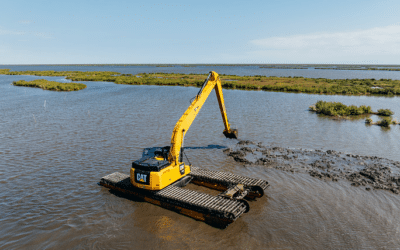
This technology shines where other machines cannot operate. By mounting a mulcher on an amphibious excavator, crews can manage vegetation in swamps, wetlands, and along coastlines with minimal environmental impact.
This specialized application demonstrates how effective these machines are in the most challenging conditions. The ability to work in saturated, boggy ground is a massive advantage for projects that once required building expensive, temporary access roads. Learning more about the capabilities of an amphibious excavator shows how this technology is opening up new frontiers in land management and environmental cleanup, turning previously inaccessible sites into manageable projects.
How This Powerful Combination Works
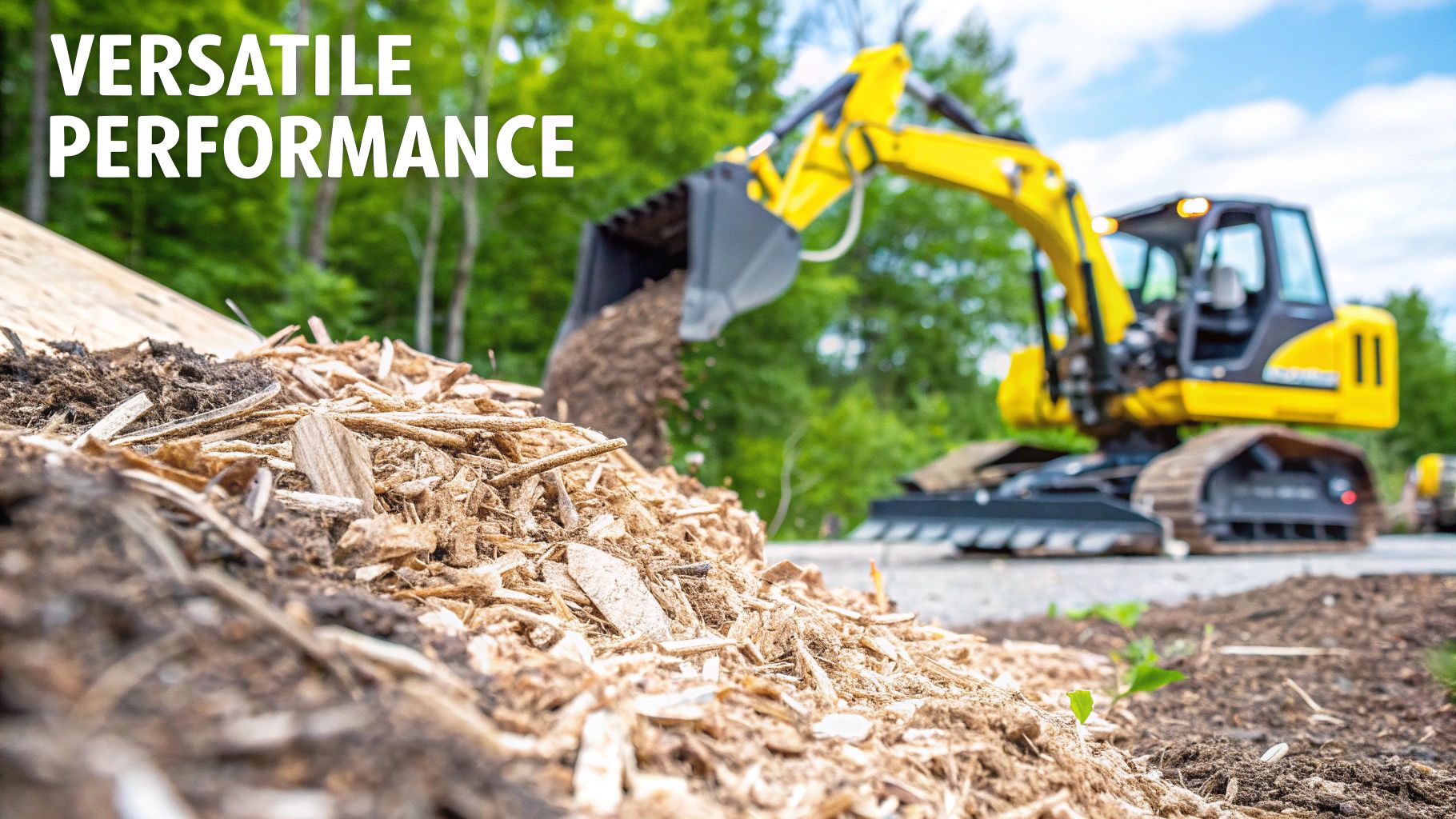
An excavator forestry mulcher’s impressive performance is not just about raw power; it is about the synergy between three key components: the excavator's hydraulic system, the mulching head's design, and the type of teeth doing the cutting.
The excavator is the power plant, the mulching head is the engine, and the teeth are the blades. When these three elements are perfectly matched to the job and to each other, you get a machine that clears land with incredible efficiency.
The entire operation runs on the excavator's hydraulic system. This system does more than just move the boom; it is a high-pressure pump that sends hydraulic fluid to the mulcher, spinning a heavy rotor at thousands of revolutions per minute. The two specifications that matter most here are hydraulic flow (GPM) and pressure (PSI).
Flow (GPM) determines the rotor's speed, keeping it spinning fast even when chewing through dense hardwood. Pressure (PSI) delivers the torque, or raw muscle, needed to tear through tough material without bogging down. If these are out of sync, you will see poor performance, overheating, and unnecessary wear. This is why pairing the right mulcher to the right machine is essential for success.
Mulching Head Design: The Engine of the Operation
The mulching head is where the work happens, and its rotor design dramatically changes how it processes vegetation. There are two main styles you will encounter in the field.
-
Drum Rotors: These heavy cylinders have teeth arranged in a spiral pattern. They excel at creating a fine, consistent mulch that looks clean and decomposes quickly. Because they can process material close to the ground, they are also great for mixing that mulch back into the topsoil.
-
Disc Rotors: These are built like a giant, high-speed flywheel with sharp teeth mounted on the perimeter. Disc mulchers are aggressive and can fell larger trees faster than a drum. They are the preferred tool for high-production clearing where the final mulch size is not the top priority.
Choosing between them comes down to your project's end goal. For careful, selective clearing or environmental restoration, a drum rotor offers more finesse. For rapidly clearing a new right-of-way, a disc mulcher gets the job done faster. At Wilco Manufacturing, we do not just supply equipment; we help clients select from the most popular Wilco marsh runner attachments to ensure their setup is perfectly configured for the task at hand.
Teeth Selection: The Critical Cutting Edge
The final piece of this performance puzzle is the teeth. These are the components that do the actual shredding, grinding, and clearing. The material and shape you choose must be right for the vegetation and ground conditions.
A common mistake we see is a mismatch between the teeth and the job. Using the wrong tooth type can slash productivity by 50% or more and lead to costly, frequent replacements.
The two main options you will be choosing from are carbide and steel.
-
Carbide Teeth: Incredibly hard and tough, these teeth are perfect for rocky soil or abrasive conditions. They work by grinding and chipping away at wood rather than slicing it. They are the champions for grinding stumps and mixing mulch into the soil, but their hardness also makes them more brittle.
-
Steel Teeth: Often called knife or blade teeth, these act like a sharp cutting tool, slicing cleanly through wood. They are far more efficient for processing trees and brush, producing a much finer mulch. Their weakness is that they dull almost instantly if they hit rocks or dirt, so they demand more maintenance.
Ultimately, it is the synergy between the excavator's hydraulic output, the mulcher's rotor design, and the right set of teeth that creates a truly optimized machine. When you understand how these parts work together, you can configure an excavator forestry mulcher that is not just a powerful tool, but a purpose-built solution for your project’s unique challenges.
Tackling Tough Jobs in Challenging Terrain
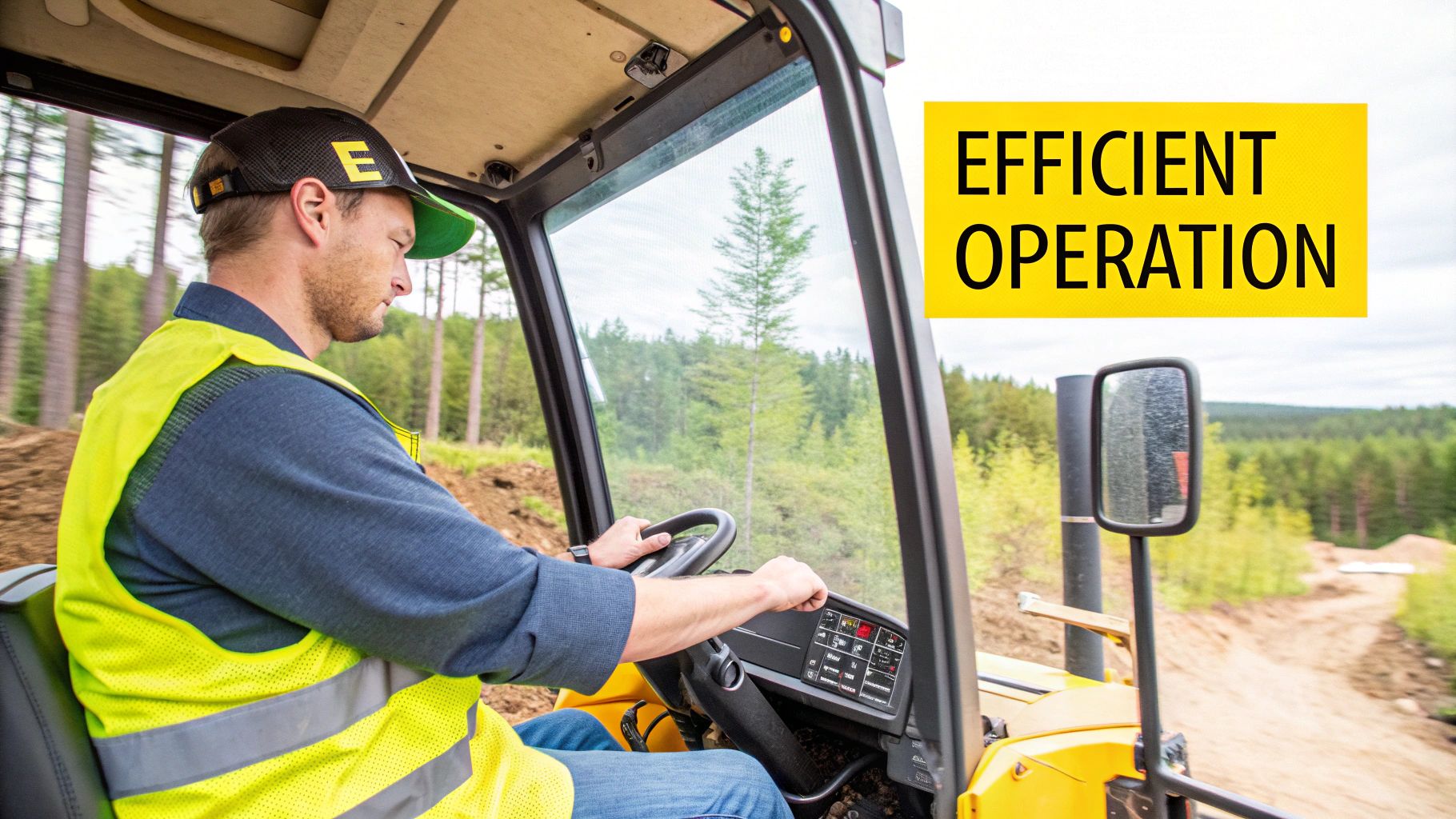
The real value of an excavator forestry mulcher becomes clear when it is put to work on a site where other equipment simply cannot go. Its unique combination of reach, power, and precision makes it the ideal tool for solving some of the most critical infrastructure and environmental challenges.
This machine is best viewed as a specialized problem-solver. It is the tool you call for maintaining remote energy corridors or carefully restoring a delicate ecosystem.
Consider pipeline and utility companies, for example. They are in a constant battle against vegetation overgrowth along their rights-of-way. If left unchecked, that growth can block access for maintenance crews, become a serious fire hazard, or even damage the infrastructure itself. An excavator with a mulching head can easily navigate rough terrain, selectively removing trees and brush without damaging the ground.
Best of all, it is a one-machine solution. That means less ground pressure, a smaller project footprint, and a significant reduction in the costs associated with labor and hauling multiple machines to the site.
Proactive Wildfire Prevention and Management
In fire-prone regions, managing vegetation is essential for public safety and property protection. An excavator forestry mulcher is a powerful tool in this effort. Crews use them to cut strategic firebreaks, which are designed to slow a wildfire's advance or stop it completely.
By shredding dense undergrowth and ladder fuels, the smaller trees and brush that allow a ground fire to climb into the main canopy, operators drastically reduce the amount of fuel available to a potential blaze.
What makes this setup so effective is its ability to work on steep hillsides and in cluttered forests where a traditional dozer or tractor could not gain a foothold. This allows crews to build defensive lines in the most strategic, hard-to-reach places, protecting communities and natural resources from catastrophic fires. Of course, modern fire management is a multi-faceted effort. Drones are also increasingly used in fire management, offering a crucial eye in the sky for surveillance and strategic planning.
The Amphibious Advantage in Sensitive Environments
The problem-solving power of an excavator mulcher gets a massive upgrade when you mount the attachment on an amphibious excavator. This is where our expertise at Wilco Manufacturing really shines. Many of the toughest environmental projects are in wetlands, swamps, and coastal marshes, all places where conventional machinery would be completely immobilized.
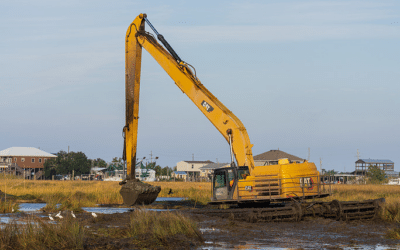
An amphibious excavator, built on a pontoon-style undercarriage, can glide across saturated soil, navigate through marshes, and even work in shallow water. This completely changes the game, allowing crews to tackle crucial land management jobs in places that were once completely inaccessible.
This specialized setup is the key to success for a wide range of environmental projects:
- Invasive Species Removal: Aggressive non-native plants like phragmites or salt cedar can overwhelm an ecosystem. An amphibious mulcher can get right into the heart of a wetland to selectively remove these invaders with minimal disturbance.
- Habitat Restoration: Projects to restore waterfowl habitats or improve water flow in marshes often depend on clearing overgrown channels. The incredibly low ground pressure of an amphibious unit protects the delicate soil structure underneath.
- Coastal Resilience Projects: Building natural defenses against storm surges often starts with clearing overgrown coastal areas and estuaries. This equipment can get right to work in those intertidal zones.
By pairing a high-performance mulcher with a platform that can float, we provide a solution that is both incredibly effective and environmentally responsible. Project managers no longer have to build expensive and destructive temporary roads into these fragile environments. This combination is the ultimate example of matching the right tool to the toughest job.
Choosing The Right Mulcher For Your Project
Selecting the right excavator forestry mulcher is about more than raw power. The secret to success on the job site is creating a balanced system, one where your excavator and the mulching head work together seamlessly. Getting this pairing wrong leads to sluggish performance, unnecessary wear and tear, and even serious safety hazards.
The goal is not to attach the biggest mulcher to your machine; it is to match the mulcher to your excavator's capabilities and the unique demands of your project. This approach guarantees you get the most out of your investment. It is the difference between fighting your equipment all day and achieving peak efficiency.
Matching The Mulcher To Your Excavator
A common mistake is assuming bigger is better, which often results in an oversized mulcher head. While it may look impressive, if it is too heavy or requires more hydraulic power than the excavator can deliver, it becomes an expensive and inefficient anchor.
To avoid this, you need to focus on three key specifications for your carrier machine.
- Operating Weight and Stability: A mulcher that is too heavy will compromise the excavator's balance, creating a tipping risk, especially when working on a slope. That extra weight also puts significant stress on the boom and pins, leading to costly repairs.
- Hydraulic Flow (GPM): Think of gallons per minute (GPM) as the factor that gives the mulcher’s rotor its speed. If your excavator cannot pump out enough flow, the rotor will constantly bog down in thick brush. This not only hurts your productivity but can also cause the entire system to overheat.
- Hydraulic Pressure (PSI): Pounds per square inch (PSI) is all about torque, the raw muscle needed to chew through hardwoods and other tough material. Without enough pressure, your mulcher will not have the power to get the job done, turning a simple clearing job into a slow, frustrating grind.
A mismatched hydraulic system is the number one cause of underperformance. An underpowered mulcher will struggle to keep its rotor speed up, while an overpowered one can destroy the mulcher's hydraulic motor and other critical components.
Always check the manufacturer's specification sheets for both the excavator and the mulcher to ensure they are a good fit. If you are looking for a carrier machine designed from the ground up to handle these demanding attachments, you can explore a range of expertly engineered Wilco Manufacturing models built for optimal power and balance.
To help you get this right, here is a quick checklist to guide your decision-making process.
Excavator and Mulcher Compatibility Checklist
Matching the mulcher to the excavator is essential for safety, efficiency, and the longevity of your equipment. This table breaks down the key specifications you need to align.
| Specification | Excavator Requirement | Mulcher Consideration | Project Impact |
|---|---|---|---|
| Operating Weight | Must be within the excavator's rated lift capacity. | The mulcher's total weight (including teeth) must not compromise stability. | Prevents tipping hazards and reduces structural stress on the boom and arm. |
| Hydraulic Flow (GPM) | Must meet or slightly exceed the mulcher's minimum GPM requirement. | The motor is rated for a specific flow range to achieve optimal rotor speed. | Ensures efficient cutting and prevents the system from bogging down or overheating. |
| Hydraulic Pressure (PSI) | Must provide the pressure needed for the mulcher's maximum torque rating. | The mulcher needs adequate pressure to power through dense or hardwood material. | Delivers the necessary cutting force to handle tough vegetation without stalling. |
| Auxiliary Hydraulics | The excavator must have a dedicated high-flow auxiliary circuit. | Ensure hoses and couplers are rated for the mulcher's flow and pressure demands. | Guarantees consistent and reliable power delivery to the attachment. |
Getting these four points right is the foundation for a productive and profitable mulching operation.
Aligning Equipment With Project Variables
Beyond the machine itself, the job site environment is a huge factor. The kind of vegetation you are clearing, the terrain you are working on, and the final finish you require all play a part in choosing the right mulching head, especially the cutting teeth.
A setup that tears through light brush on sandy soil will fail if you put it up against dense hardwoods on a rocky hillside. The key is to assess the site and know exactly what you are dealing with before you commit to an equipment setup.
This visual guide helps break down how to choose the right teeth for the job.
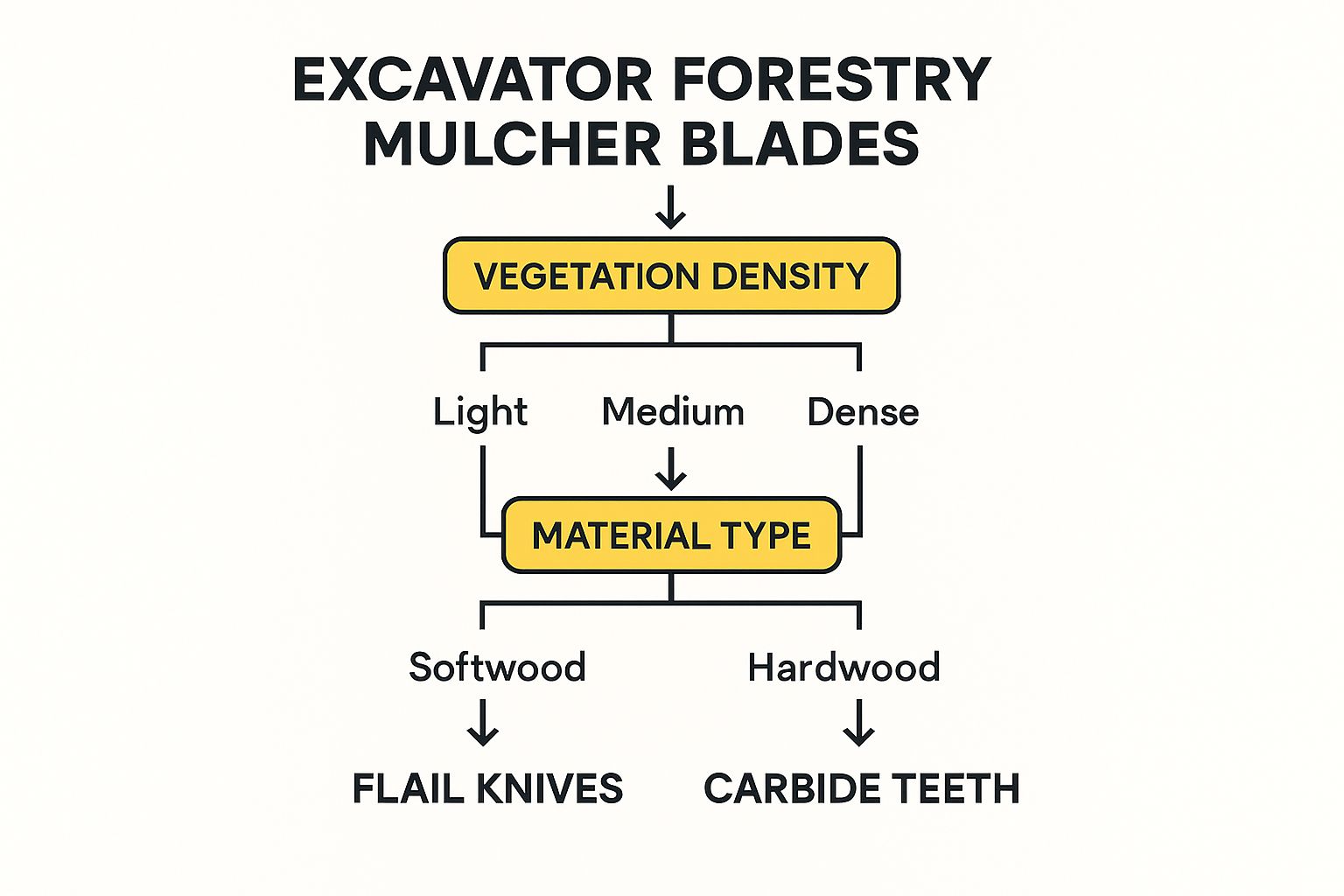
As you can see, tough, dense hardwoods call for heavy-duty carbide teeth, whereas lighter vegetation can be handled easily with sharp steel blades. Making the right choice here is fundamental to keeping your machine running and productive.
Here are a few specific factors to consider:
- Vegetation Type and Density: Are you dealing with tall grass, thick shrubs, or standing timber? Steel knife-style teeth give you a clean, sharp cut on softer vegetation. For grinding through dense, tough wood, carbide hammer teeth are what you need.
- Ground Conditions: If the ground is rocky, abrasive, or full of debris, carbide teeth are the only practical choice. They can take a beating and handle accidental ground strikes without shattering. Steel blades, on the other hand, will get dull or chip almost instantly in those conditions.
- Desired Finish: Are you just trying to knock down vegetation, or do you need a finer, park-like finish? Drum-style mulchers equipped with knife teeth tend to produce a smaller, more uniform mulch that looks great and decomposes faster.
Why Global Demand for Mulching Solutions Is Growing
The excavator forestry mulcher's rising popularity is the result of market pressures, technological advancements, and a worldwide shift towards more responsible land management. Traditional land clearing methods, such as burning debris piles or hauling material away, are quickly becoming obsolete as industries face stricter environmental regulations and greater public oversight.
This creates a real need for solutions that get the job done efficiently without leaving a heavy environmental footprint. Mulching fits this need perfectly. By turning vegetation into a protective layer of organic material and returning it directly to the ground, it helps prevent soil erosion, enriches the soil, and eliminates the need for expensive, carbon-heavy disposal methods. This alignment with sustainable practices is a significant reason these machines are now used in so many different sectors.
Market Expansion and Economic Drivers
The economic case for forestry mulching is just as strong as the environmental one. The global market for this equipment, including excavator-mounted models, was recently valued at around $1.5 billion. Projections show it could climb to $2.9 billion by 2033. This is not slow growth; it is a boom. This expansion is driven by a clear need for effective land clearing, vegetation control for expanding infrastructure, and a greater push for sustainable forestry. You can find a full market analysis of forestry mulchers and their projected growth for more details.
This growth is a testament to the machine’s impressive return on investment. An excavator with a mulcher attachment combines multiple jobs, felling, shredding, and spreading, into one fluid operation. On the ground, this means fewer labor hours, less fuel burned, and no need for a fleet of different machines. For project managers in construction, pipeline installation, or land reclamation, these efficiencies translate to lower costs and projects that finish on schedule.
As the global demand for mulching solutions grows, businesses operating excavator forestry mulchers are also scrutinizing their overall environmental impact. Learning How To Reduce Business Carbon Footprint Top Strategies can help companies align their operations with broader sustainability goals.
Technological Progress Powering Performance
It is not just market demand pushing things forward; the technology itself keeps improving. These machines are becoming more powerful, more efficient, and smarter. We are seeing genuine advancements that redefine what is possible on a job site.
The integration of advanced hydraulics and smarter attachment design has transformed the modern excavator forestry mulcher. We are seeing machines that deliver more cutting power with less fuel, operate with greater precision, and provide operators with real-time performance data to optimize their workflow.
Here are a few of the key advancements:
- More Efficient Hydraulic Motors: Modern axial piston motors are a game-changer. They deliver far more torque and speed than older gear motors, all while drawing less hydraulic power from the excavator.
- Improved Tooth and Rotor Design: Thanks to better metallurgy and engineering, today's cutting teeth are tougher, stay sharp longer, and can be designed for specific jobs, from creating fine mulch to aggressively grinding stumps.
- Integration of Telematics: Onboard sensors now allow fleet managers to monitor machine health, track productivity, and schedule maintenance before a component fails. This minimizes downtime and keeps equipment running reliably for years.
These innovations make it clear that investing in an excavator forestry mulcher is not just about keeping up. It is about getting ahead and preparing for a future where land management is defined by efficiency, sustainability, and performance. At Wilco Manufacturing, we are focused on integrating these advancements into our equipment to solve today's problems while anticipating the needs of tomorrow.
Keeping Your Mulcher and Crew in Top Shape
When operating equipment as powerful as an excavator forestry mulcher, protecting your crew and your investment is paramount. This is a high-performance machine that demands consistent attention to operate safely and effectively. The best way to guarantee its longevity and prevent expensive downtime is to establish a solid routine of daily checks and scheduled maintenance.
Think of it like a pilot's pre-flight checklist. Taking a few minutes before starting the machine each day can mean the difference between a smooth shift and a catastrophic failure. This is about building a culture of safety and excellence on the job site, something we practice at Wilco Manufacturing.
The Daily Walk-Around: Your First Line of Defense
Before the engine turns over, the operator must perform a quick but thorough inspection. This simple habit is crucial for catching wear, damage, or other hazards that could disrupt the day's work.
Here is what that looks like in practice:
- Teeth Check: Inspect every single tooth. Are any cracked, chipped, or severely worn? Even one damaged tooth can unbalance the rotor, leading to violent vibrations that can destroy bearings and motors.
- Hydraulic Hose Inspection: Scan all hydraulic lines running to the mulcher head. You are looking for leaks, chafing, or cracks. A hose failure under thousands of PSI is not just a mess; it is a major safety hazard that stops work instantly.
- Guard Inspection: Make sure all safety guards on the mulcher and excavator are in place and securely fastened. They are there to stop high-velocity debris from striking the operator or anyone else nearby.
More Than Daily Checks: Routine Upkeep and Job Site Safety
Beyond the daily walk-around, you need a proper maintenance schedule for the long-term health of your excavator forestry mulcher. Components like rotor bearings and drive belts are under incredible stress, so they require regular attention based on the manufacturer’s recommendations.
Neglecting routine maintenance is one of the fastest ways to turn a productive asset into a liability. Consistent upkeep not only extends the life of the attachment but is fundamental to safe operation.
To keep your equipment running and your people safe, these protocols are non-negotiable:
- Maintain a Safe Distance: You must establish and enforce a safe working perimeter around the machine. Debris can be thrown a long way at incredible speeds, so no one should ever be inside this zone while the mulcher is running.
- Know Your Equipment's Limits: The operator must be fully trained on the capabilities and limitations of the specific excavator and mulcher combination. Pushing the machine past its design limits is a surefire way to cause breakdowns and accidents.
- Wear the Right Gear: Proper personal protective equipment (PPE) is mandatory. This means hard hats, safety glasses, and hearing protection, at a minimum. For the excavator itself, a polycarbonate or shatterproof front window is not optional; it is a requirement for this type of work.
Frequently Asked Questions
When it comes to adding an excavator forestry mulcher to your fleet, many practical questions arise. Getting clear answers is the first step toward making a smart investment and keeping your projects running on schedule.
Let's address some of the most common questions we hear from project managers and operators, covering everything from matching the right machine to the attachment to tackling unique jobs in tough environments.
What Size Excavator Do I Need for a Forestry Mulcher?
The right excavator size depends on the mulcher head's weight and its hydraulic power requirements. For lighter work, such as clearing brush and small saplings, a mini excavator in the 5 to 10-ton class can often be sufficient.
However, for serious land clearing involving dense woods and larger trees, you need to use a larger machine. In these cases, you will want a mid to large-size excavator, typically in the 20 to 40-ton range.
The two most critical specifications to consider are the excavator's operating weight, which ensures stability, and its hydraulic system. You must confirm that the excavator’s hydraulic flow (GPM) and pressure (PSI) match the mulcher's requirements for peak performance. Always cross-reference the specifications from both manufacturers to create a balanced, productive, and safe pairing.
Can an Excavator Forestry Mulcher Grind Stumps?
Yes, many mulcher heads, especially those equipped with durable carbide teeth, can effectively grind stumps. They are great for grinding them flush with the ground, leaving the site with a clean finish.
However, it is important to remember that these tools are primarily designed for shredding standing trees and brush. While they can handle occasional stumps, they are not as efficient as a dedicated stump grinder for deep grinding. Using your mulcher for frequent stump grinding will lead to much faster wear on the teeth. It is best to use it for incidental stumps rather than as a primary stump removal tool.
How Does an Amphibious Excavator Change the Game for Mulching?
An amphibious excavator, a Wilco Manufacturing specialty, completely redefines where you can operate a forestry mulcher. The machine's pontoon undercarriage allows it to float and navigate through wetlands, swamps, and shorelines, areas that are completely off-limits to standard tracked equipment.
This combination is a game-changer for environmental restoration, pipeline maintenance in marshlands, and managing vegetation in waterlogged terrain. You no longer need to build costly and disruptive temporary access roads. By taking the mulcher where no other machine can go, you open up a new world of possibilities for tackling the most challenging land management jobs out there.
Ready to tackle your toughest land clearing challenges with the right equipment? Contact Wilco Manufacturing today to discuss our amphibious excavators and specialized attachments. Let our experts help you build a solution that delivers unmatched performance in any environment. Learn more at https://wilcomfg.com.