Introduction
Amphibious equipment operates in environments where water, silt, vegetation and abrasive sediments interact directly with mechanical systems. These conditions accelerate wear, affect lubrication performance and expose critical components to corrosion. An effective Wilco Manufacturing amphibious equipment maintenance guide must therefore address how to maintain undercarriage amphibious machine components, track assemblies and hydraulic systems under high-moisture and high-load conditions.
This resource provides maintenance engineers, fleet managers and service departments with a structured approach to routine inspection schedules, wear assessment, corrosion control, lubrication, seal protection and spare parts planning. The guidance emphasises best practices and preventive maintenance checklists tailored for Wilco Manufacturing marsh buggies, dredging support units and other amphibious platforms.
Understanding Amphibious Working Conditions
Amphibious machines encounter unique stresses compared with land-based tracked equipment. The following operating characteristics influence maintenance priorities:
- High moisture exposure affecting metal fatigue and seal life
- Continuous interaction with silt and sand that infiltrates joints and bushings
- Increased load on track chains due to drag forces in soft terrain
- Temperature fluctuations that impact hydraulic fluid stability
- Organic debris that accelerates corrosion and obstructs moving parts
Recognising these conditions supports accurate diagnosis of wear patterns and the development of maintenance intervals suited to specific job environments.
Section 1: Undercarriage Maintenance
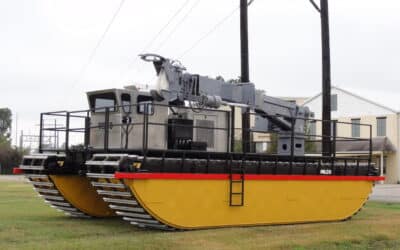
The undercarriage is the foundation of amphibious mobility. Drag loads, buoyancy transitions and abrasive sediments place significant stress on pontoons, rollers, idlers and chains. Additional wear occurs as silt and debris pack into moving joints, increasing friction, accelerating metal fatigue and demanding shorter inspection and service intervals.
Key Wear Components
Understanding high-risk components allows teams to perform targeted inspections:
- Pontoon structure and internal compartments
- Track chains and pin-bushing assemblies
- Idlers and rollers
- Bearing housings and lubrication points
- Bolting systems that secure tracks and attachments
Routine Inspection Schedule
A routine inspection schedule helps maintain undercarriage amphibious machine performance and prolong component life.
Daily Checks
- Visual inspection of pontoons for dents, cracks and seam fatigue
- Removal of silt, weeds and debris from tracks and rollers
- Confirmation of correct track tension
- Inspection of grease points for leakage or contamination
Weekly Checks
- Measurement of chain stretch using manufacturer tolerances
- Inspection of idler wear surfaces
- Verification of pontoon compartment water levels or leaks
- Examination of fasteners for loosening due to vibration
Monthly Checks
- Complete pontoon internal inspection if access ports are available
- Alignment checks for idlers and rollers to prevent uneven track wear
- Lubrication audits to confirm correct products and intervals
- Inspection of sacrificial anodes where fitted
Common Undercarriage Issues and Corrective Actions
| Issue | Indicators | Corrective Action |
| Chain stretch | Reduced track pitch integrity, increased vibration | Replace pins and bushings or full chain assembly depending on wear level |
| Pontoon corrosion | Flaking surfaces, paint failure, pitting | Clean, treat and recoat; replace sections if structural integrity is compromised |
| Misalignment | Uneven roller wear, track drifting | Re-align roller and idler assemblies |
| Fastener loosening | Rattling, uneven track engagement | Retorque or replace bolts; inspect threads for damage |
Corrosion Protection
Amphibious equipment is highly susceptible to corrosion due to extended water contact. Priorities include:
- Regular cleaning and freshwater flushing after brackish or saltwater use
- Application of marine-grade coatings to exposed metal surfaces
- Inspection of welded joints for early signs of fatigue
- Use of sacrificial anodes to limit electrochemical corrosion
Lubrication Practices for Undercarriage Components
Lubricants prevent premature wear by reducing friction between track components. Considerations include:
- Selecting marine-compatible greases resistant to moisture washout
- Increasing lubrication frequency in abrasive or high-silt environments
- Verifying grease seals at each pivot point
- Monitoring temperature-induced viscosity changes
Section 2: Track System Maintenance
Track systems transfer machine power to marsh terrain. Proper care ensures traction stability and reduces fuel consumption.
Track Tension
Correct tension prevents derailment, reduces wear and maintains efficient traction.
- Too tight: Accelerated idler and roller wear
- Too loose: Increased risk of derailing, chain slap and component shock loads
Adjust tension using manufacturer specifications and recheck after every operational shift in muddy conditions.
Track Shoes and Pads
Pads experience constant abrasion and impact. Inspect for:
- Excessive wear on contact surfaces
- Cracks caused by heavy impacts
- Bolt loosening due to vibration
Replace pads showing structural compromise to maintain operational safety.
Sprockets and Idlers
Sprockets transfer power through the chain, and idlers guide alignment.
Indicators of wear include:
- Hooked sprocket teeth
- Uneven wear bands on idlers
- Increased noise during movement
Timely replacement prevents accelerated chain degradation.
Section 3: Hydraulic System Maintenance
Hydraulics control steering, attachments and propulsion. A hydraulic maintenance marsh buggy strategy must focus on contamination control, fluid stability and seal integrity.
Importance of Clean Hydraulic Fluid
Water intrusion and sediment contamination are common in amphibious operations. Effects include:
- Seal damage
- Reduced pump efficiency
- Accelerated wear in control valves and cylinders
Routine fluid sampling is essential for early detection.
Hydraulic Inspection Schedule
Daily
- Check for external hose leaks
- Confirm correct fluid levels
- Inspect return filters for signs of clogging
Weekly
- Clean breather caps
- Inspect hose routing for abrasion points
- Monitor cylinder rod surfaces for pitting or corrosion
Monthly
- Conduct fluid analysis
- Inspect pump and motor mounts for vibration looseness
- Replace filters according to load cycles, not just operating hours
Common Hydraulic Issues
- Cavitation resulting from low fluid levels or blocked filters
- Slow response times due to internal leakage
- Overheating during long operations in dense vegetation
Corrective actions involve restoring fluid levels, replacing filters, correcting hose routing and servicing affected components.
Hydraulic Seal Care
Seal integrity is critical in wet environments. Strategies include:
- Using seal materials rated for amphibious conditions
- Cleaning rod surfaces after each shift to prevent silt abrasion
- Checking for early signs of hardening or cracking
Section 4: Corrosion Prevention Strategies
Amphibious operations require a systematic approach to corrosion control. Constant exposure to water, salt, organic acids, and abrasive sediments accelerates metal degradation, making protective coatings, routine washing, seal inspections, and timely component replacement essential to preserving structural integrity and system reliability.
For Amphibious Hydraulic Undercarriages, these measures are especially critical because their load-bearing components operate in high-stress, high-moisture environments where corrosion can rapidly compromise performance and longevity.
Cleaning and Flushing
- Rinse undercarriages, tracks and attachments with clean water after each shift
- Remove organic material that traps moisture
Coatings and Treatments
- Use epoxy primers and marine-grade topcoats
- Inspect welds and joints before recoating
Storage Practices
- Store equipment on elevated ground when possible
- Periodically rotate idle machines to circulate lubricants
Section 5: Spare Parts Planning and Inventory
Preventive maintenance relies on consistent availability of parts.
Critical Spares
- Track chain assemblies
- Rollers and idlers
- Hydraulic hoses and seals
- Filters and lubricants
Inventory Management Tips
- Stock high-wear items based on previous failure patterns
- Label and date hydraulic components to track service life
- Maintain cross-reference lists for parts shared across machine models
Section 6: Preventive Maintenance Checklists
Checklists standardise inspections and reduce oversight.
Undercarriage Checklist
- Visual pontoon assessment
- Track tension measurement
- Roller and idler inspection
- Lubrication point testing
Track System Checklist
- Shoe and pad inspection
- Sprocket tooth assessment
- Chain stretch measurement
Hydraulic System Checklist
- Hose leak detection
- Filter status check
- Fluid sampling and analysis
Conclusion
Effective maintenance of amphibious equipment relies on structured inspection routines, accurate wear assessment and proactive care of undercarriage, track and hydraulic systems. An evidence-based schedule improves performance, minimises downtime and extends operational lifespan across demanding marsh, swamp and shallow-water environments. Contact us today for expert support and tailored maintenance assistance.
Frequently Asked Questions
How often should I inspect an amphibious undercarriage?
Daily inspections are recommended, with detailed weekly and monthly checks based on the operating environment.
What causes rapid track wear in marsh buggies?
Abrasive sediments, incorrect tension and misalignment contribute to rapid wear.
How do I protect hydraulic components from water intrusion?
Use high-quality seals, maintain breather filters, and conduct regular fluid sampling to detect contamination early.
Should I follow standard excavator maintenance intervals?
Amphibious machines require more frequent inspections due to moisture, silt exposure and drag loads.