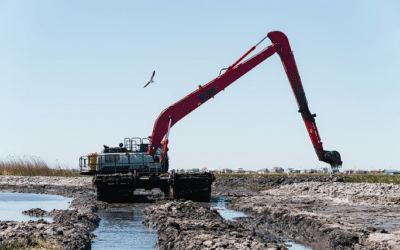
Wetland construction follows different rules than work on dry ground. Soft soils, changing water levels, and protected habitat all shape what a crew can do and when. A marsh buggy is built for these conditions, and planning a project around one from the start helps teams manage cost, schedule, and environmental impact. This guide explains how to assess a site, choose suitable machinery, and sequence the work so the machine can perform the way it was designed to on wetland sites.
Key Features of a Marsh Buggy for Wetland Work
A marsh buggy is an excavator mounted on buoyant pontoons with a drive system made for mud, shallow water, and saturated ground. Instead of sinking, the machine spreads its weight across a wide surface and moves through terrain that would trap a standard track machine. Operators can dig, dredge, grade, and place material from a single platform without building access roads first.
That design matters because access is often the largest hurdle in wetland work. Temporary roads and timber mats take time and money to install, and they leave a footprint that must later be removed. A floating swamp buggy can reach the work area directly, which reduces the amount of ground disturbed before the real work begins.
Start With a Thorough Site Assessment
Good planning begins with information. Before mobilizing any machine, collect the following details:
- Water depth range: Record typical, low, and high water levels across the seasons.
- Soil composition: Identify peat, silt, clay, and sand layers, since each affects traction and digging resistance.
- Vegetation: Dense roots, cane, or woody debris can influence drive performance.
- Access points: Locate launch sites, canals, and staging areas.
- Protected areas: Mark nesting zones and sensitive plants that limit activity.
A site walk during both wet and dry periods gives a realistic view of conditions. Aerial imagery and soil borings add detail that a visit cannot provide.
Match the Equipment to the Work
Wetland projects vary widely. Some involve channel dredging, while others focus on shoreline restoration, pipeline corridors, levee repair, or habitat creation. Each task places different demands on marsh equipment, so define the scope before selecting a machine.
Consider these factors:
- Reach and digging depth: The boom and arm should cover the work area without repeated repositioning.
- Buoyancy and load capacity: Pontoon size should support the machine weight plus attachments and material.
- Attachments: Buckets, clamshells, and mulching heads allow one platform to handle several tasks.
- Transport: Plan how the machine will be hauled, launched, and retrieved.
An amphibious marsh buggy with the right configuration can reduce the number of separate machines on site. Fewer machines usually means simpler logistics and fewer points of contact with sensitive ground.
Plan Around Water Levels and Seasons
Timing can make or break a wetland schedule. Tides, rainfall, river stages, and seasonal flooding all change the working environment. A buggy handles shallow water and soft ground well, but extreme conditions still call for careful judgment.
Build the schedule with flexibility. Identify the months when water levels best support the planned activity, and avoid periods tied to wildlife breeding or migration when restrictions apply. Include contingency days for storms.
Address Permits and Environmental Requirements
Most wetland work requires approval from federal, state, or local agencies. In the United States, projects often involve review under the Clean Water Act, and many also need coordination with agencies that oversee fish, wildlife, and coastal resources. Permit conditions may set limits on dredge volume, disposal methods, work windows, and erosion control.
Review these requirements early, because they influence equipment choices and sequencing. Low ground pressure and reduced need for access roads can support environmental goals, since less habitat is disturbed. Document each phase with photographs and written logs so inspectors can confirm that the work followed approved plans.
Sequence the Work for Efficiency
A clear sequence keeps a wetland job moving and helps avoid rework. A typical order looks like this:
- Mobilization: Transport the buggy to the launch point and inspect all systems.
- Delivery to the work area: Move the machine across water or soft ground to the starting location.
- Primary excavation or dredging: Complete the main earthwork according to design grades.
- Material placement: Use dredged soil to build berms or fill low spots as specified.
- Finishing and stabilization: Shape slopes and prepare areas for vegetation.
- Demobilization: Retrieve the machine and clean it to prevent the spread of invasive species.
Working from one end of the site to the other keeps the machine on a predictable path and avoids repeated travel through soft ground.
Prioritize Safety and Long-Term Support
Soft ground, deep water, and remote locations introduce risks that differ from standard earthmoving. Operators should be trained on the machine, including buoyancy limits and stability when the boom is extended. Crews should carry flotation devices and communication equipment and follow a clear emergency plan.
Daily inspections matter for a floating swamp buggy. Check pontoons, drive components, hydraulic lines, and fuel systems before each shift. Also plan for parts availability and technical support before the machine arrives, since downtime in a remote wetland can be slow and costly.
Final Thoughts on Planning Your Wetland Project
Accurate site data, the right machine, and steady support shape each project. To explore a marsh buggy built for these conditions, contact Wilco Manufacturing, LLC.
Frequently Asked Questions
Q1. What is a marsh buggy used for?
A marsh buggy is used for excavation, dredging, grading, and material placement in wetlands, swamps, and other soft or flooded terrain. It lets crews reach work areas that standard equipment cannot cross safely.
Q2. How does an amphibious marsh buggy move through mud and water?
An amphibious marsh buggy rides on large pontoons that provide buoyancy and spread the machine weight over a wide area. A specialized drive system then pulls the machine through mud, shallow water, and dense vegetation.
Q3. Do I need access roads when using a floating swamp buggy?
Often, no. Because a floating swamp buggy can travel across soft ground and shallow water, many projects avoid building temporary roads or mat systems. This can save time and reduce disturbance to the site.
Q4. What should I check before choosing marsh equipment?
Review water depth, soil type, vegetation, access points, project scope, and permit limits. Also confirm the required reach, load capacity, attachment options, and transport plan for the marsh equipment you select.
Q5. Does wetland construction require permits?
In most cases, yes. Wetland work in the United States commonly involves federal, state, and local review. Requirements vary by location and project type, so confirm details with the appropriate agencies before work begins.