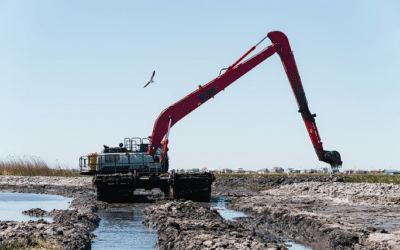
Some of the most important construction and conservation work happens where firm ground does not exist. Marshes, swamps, tidal flats, and flooded corridors can stop standard machines before the job begins. Across many sectors, crews turn to amphibious equipment to reach these places, work safely, and limit the damage left behind. This article looks at the industries that depend on it and the conditions that shape their choices.
Why Difficult Ground Calls for Specialized Machines
Soft soil cannot carry the concentrated weight of a conventional machine. Tracks sink, haul roads wash out, and recovery takes hours or days. Machines built with buoyant pontoons spread their load across a wide surface, which lets them travel over mud, shallow water, and matted vegetation. Because they can work without prepared access, they suit projects where roads would be expensive, slow, or harmful to the site.
Wetland Restoration and Conservation
Conservation agencies and restoration contractors rebuild marsh habitat that has been lost to erosion, subsidence, and altered water flow. The work often involves moving sediment, shaping channels, and building low ridges that support new plant growth. Purpose-built marsh equipment can handle this work while keeping disturbance to existing vegetation small. Less trampling means faster recovery and fewer repairs after construction ends.
Oil, Gas, and Pipeline Projects
Energy companies maintain wells, pipelines, and access canals in coastal and swampy regions. Installing or repairing a line through saturated ground can require trenching, backfilling, and clearing in places no truck can reach. Many contractors use swamp machines that can excavate while floating or riding on soft ground, which reduces the need for temporary roads and timber mats. Crews also use them to maintain canal banks and remove debris that blocks water flow.
Coastal Protection and Levee Work
Coastal communities depend on levees, berms, and shoreline structures that must be built and repaired on weak, waterlogged soil. After storms, damaged sections often need quick attention while the ground is still wet. Amphibious machinery allows crews to place material, reshape slopes, and repair breaches without waiting for the site to dry. That speed can matter when another weather event is approaching.
Dredging and Canal Maintenance
Navigation channels, drainage canals, and irrigation ditches fill with sediment over time. Dredging restores depth and flow, but many waterways are too shallow for large vessels and too soft for land equipment. Pontoon-mounted excavators fill that gap by working directly from the water surface or bank. Operators can remove sediment, widen channels, and place spoil nearby, often with a single machine and a small crew.
Utilities and Right-of-Way Corridors
Power lines, telecommunications routes, and water mains cross wetlands and floodplains. Crews must set poles, clear brush, and maintain easements in terrain that may be flooded for part of the year. Equipment with low ground pressure helps them do this work without carving deep ruts. This matters for both access and regulatory compliance, since agencies often limit disturbance in protected areas.
Agriculture and Water Management
Farms and water districts maintain drainage ditches, retention ponds, and managed wetlands that silt up and grow over. Crews need to clear vegetation, restore channel depth, and repair banks, often while the soil is saturated. Equipment that floats or rides on soft ground lets them do this work in wet seasons without damaging nearby fields. Regular maintenance also supports flood control and water quality.
Environmental Remediation and Disaster Response
Cleanup projects in wetlands, such as removing contaminated sediment or invasive vegetation, require precision and care. Emergency crews also need to clear debris, repair infrastructure, and restore drainage after floods and hurricanes. In both cases, amphibious equipment gives teams a way to reach the affected area without building roads first, which saves time when conditions are urgent.
What These Industries Look for in a Machine
Whatever the sector, buyers tend to weigh similar practical factors:
- Ground pressure: Low pressure protects soft soil and reduces the risk of becoming stuck.
- Buoyancy: Pontoons should carry the machine, attachments, and moved material with margin to spare.
- Reach and attachments: Buckets, clamshells, and mulching heads let one machine perform several tasks.
- Serviceability: Remote sites demand dependable components and accessible technical support.
- Transport: The machine should be easy to haul, launch, and retrieve.
Planning a Project in Soft or Flooded Terrain
Success in difficult terrain depends on preparation. Before work begins, teams should gather the details that affect machine choice and method:
- Site conditions: Record water depth, soil type, and vegetation across the seasons.
- Access: Identify launch points, canals, and staging areas.
- Regulations: Confirm permit conditions, work windows, and protected areas.
- Scope: Define reach, depth, and material volumes before selecting attachments.
Sharing this information early helps contractors, engineers, and equipment suppliers agree on a realistic plan. It also reduces the chance of delays caused by unexpected conditions or missing approvals.
Safety and Maintenance on Remote Sites
Working on soft ground and open water adds risks that standard earthmoving does not. Operators should understand buoyancy limits and boom stability, and crews should carry flotation devices and radios. Daily checks of pontoons, drive components, and hydraulic lines help prevent breakdowns in places where recovery is slow. Planning for parts and technical support before mobilizing keeps projects on schedule.
Final Thoughts on Working in Difficult Terrain
Difficult ground exists in many industries, and each one needs equipment suited to its conditions. Understanding the terrain, the scope, and the regulations leads to better planning. Careful preparation also protects nearby habitat. To discuss amphibious equipment for your next project, contact Wilco Manufacturing, LLC.
Frequently Asked Questions
Q1. What is amphibious equipment?
Amphibious equipment is machinery designed to operate on soft ground, in shallow water, and across the boundary between them. Most designs use buoyant pontoons and a drive system that moves the machine through mud and water.
Q2. Which industries use marsh equipment?
Marsh equipment is used in wetland restoration, energy and pipeline work, coastal protection, dredging, utilities, environmental remediation, and emergency response.
Q3. What tasks can swamp machines perform?
Swamp machines can excavate, dredge, grade, clear vegetation, and place material in flooded or saturated terrain. Attachments allow one machine to handle several tasks on a single project.
Q4. Why do crews choose amphibious machinery for soft ground?
Amphibious machinery spreads its weight over a wide area, which reduces the risk of sinking and limits disturbance to the site. It also allows work to begin without building temporary access roads.
Q5. Do wetland projects need permits?
In most cases, yes. Work in wetlands in the United States commonly involves federal, state, and local review. Requirements vary, so confirm details with the appropriate agencies before work begins.