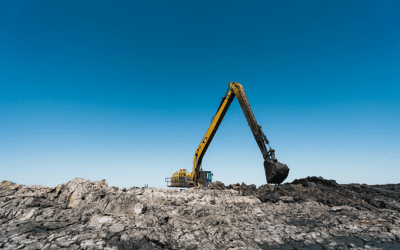
When a standard excavator bucket meets solid rock or thick concrete, the job grinds to a halt. This is where an excavator with a hammer attachment transforms a digging machine into a high-impact powerhouse. This combination is the industry’s go-to solution for breaking down the toughest materials with remarkable efficiency and precision. For project managers in construction, dredging, or pipeline installation, understanding this tool is key to overcoming major obstacles.
The Modern Powerhouse of Demolition and Breaking
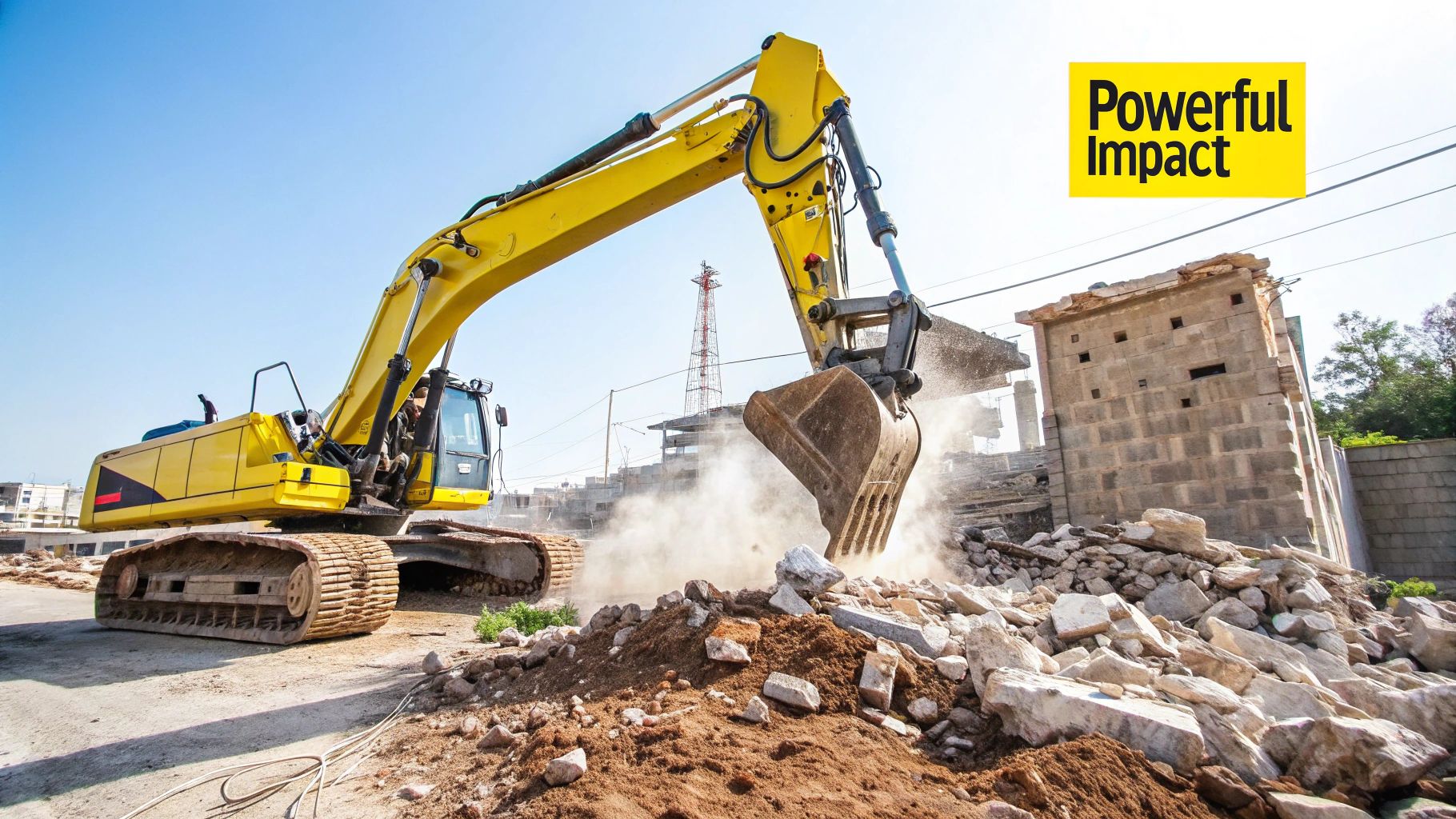
On any major construction or mining site, stubborn materials are a given. Whether it is a layer of bedrock, an old concrete foundation, or massive boulders, you need a tool that delivers more than just raw power. You need targeted, controlled force. Older methods were often slow, physically demanding, and frankly, dangerous.
That is why the hydraulic hammer attachment has become so essential. By mounting this tool onto an excavator's boom, an operator can channel thousands of foot-pounds of energy into a single point, shattering hard materials with ease. The excavator is no longer just for digging and moving earth, it becomes a specialized breaking machine.
Why This Combination Is Essential
The industry has clearly recognized the value of this setup. The market for excavator-mounted hammers is expected to grow significantly, driven by a global push for smarter, more effective equipment. This is not just a trend, it is a fundamental shift in how heavy-duty breaking is performed.
So, what’s driving this demand? It comes down to a few core advantages that crews on the ground immediately recognize:
- Serious Productivity Boost: A hydraulic hammer gets the job done exponentially faster than a team with handheld breakers or less suitable machinery. For example, a single operator can demolish a concrete slab in hours that would take a manual crew days.
- A Safer Way to Work: Operators stay safely inside the reinforced cab, shielded from the flying debris and intense vibrations that make manual demolition so hazardous.
- One Machine, Many Jobs: An excavator can quickly swap its hammer for a bucket, grapple, or other tools. This versatility is invaluable for project efficiency. You can see just how much these tools expand a machine's capabilities in our guide to the most popular Wilco Marsh Runner attachments.
Think of an excavator with a hammer as the ultimate problem-solver for heavy-duty breaking. It directly tackles the challenge of clearing hard materials, helping keep complex projects on time and on budget.
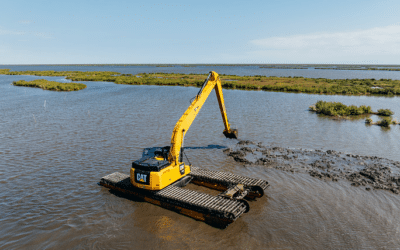
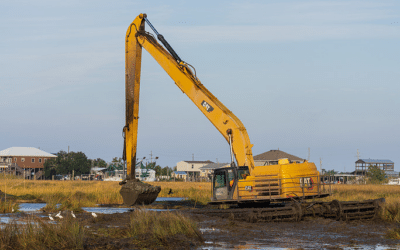
This power becomes even more critical in challenging environments like wetlands, marshes, and flooded work sites. Wilco Manufacturing’s amphibious excavators can be fitted with hydraulic hammers, bringing this immense breaking force to terrain that would stop conventional equipment in its tracks. It’s this kind of adaptability that solves industry-specific problems, no matter how tough the ground gets.
How an Excavator Hydraulic Hammer Works
To really get a feel for the incredible power of an excavator hammer, you have to look at the smart engineering behind it. Think of it as a supercharged, automated sledgehammer. But instead of muscle power, it uses the excavator’s own hydraulic system to deliver a relentless series of high-impact blows.
It all starts with the excavator's engine. The engine drives a hydraulic pump, which is the heart of the whole operation. This pump shoves high-pressure fluid through tough, reinforced hoses straight to the hammer attachment. This constant flow of hydraulic oil is the lifeblood, providing the raw energy to make the hammer work. It is a closed-loop system designed to transfer as much energy as possible with very little waste.
The Secret is in the Fluid and Gas
Once that high-pressure oil gets inside the hammer, it meets a clever control valve. This valve is the brain of the unit, orchestrating the flow of fluid to push a massive internal piston up and down. This heavy piston is what ultimately does the smashing.
As hydraulic fluid shoves the piston upward, it also squeezes a pocket of high-pressure nitrogen gas at the top of the hammer. This compressed gas acts like a tightly coiled spring, storing a huge amount of potential energy. Then, in a split second, the control valve flips. The hydraulic pressure releases, and the expanding nitrogen gas slams the piston down with incredible force and speed.
It is this one-two punch of hydraulic pressure lifting the piston and compressed nitrogen gas driving it down that gives a modern hammer its immense breaking power. This dual-force system makes sure every single impact is maximized, letting the tool shatter even the toughest materials.
This entire cycle, piston up, piston down, repeats hundreds of times every minute. The result is a rapid-fire series of powerful impacts channeled through the tool bit, be it a chisel, moil point, or blunt end, and delivered right where you need it. It’s a far cry from older pneumatic systems that just couldn’t keep up.
This is how the hammer's mechanics deliver real-world advantages on the job site.
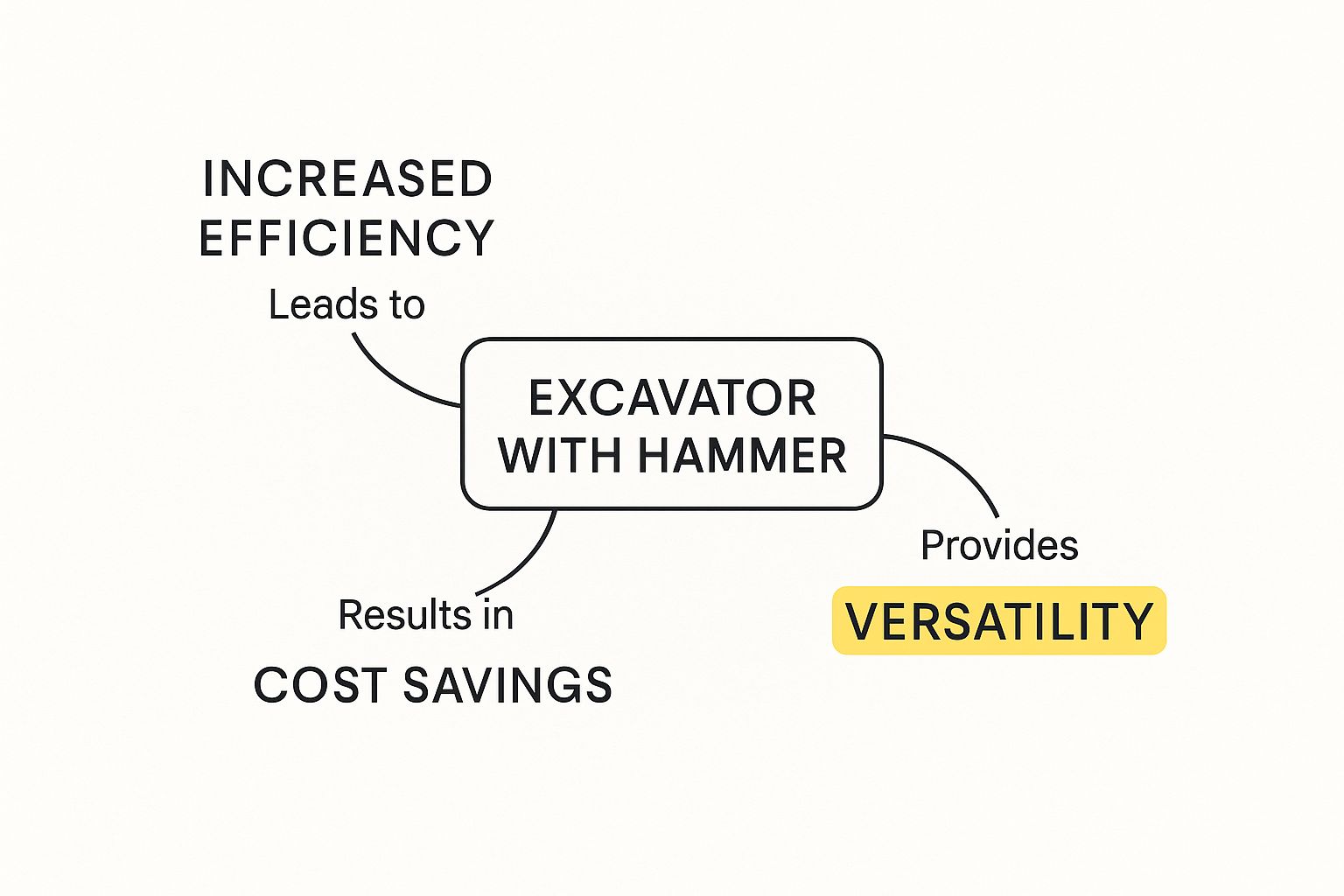
As you can see, the core design directly translates into better performance and efficiency, making it a go-to tool for serious demolition and rock breaking.
The Key Parts That Make It Happen
A few critical components work in perfect sync to produce this controlled chaos. Knowing what they are and what they do makes it clear why choosing the right hammer and keeping it in top shape is so important.
- Piston and Cylinder: This is the core of the hammer. The piston is a heavy, precision-engineered steel rod that shoots up and down inside the cylinder to deliver the blow. Its size and travel distance are what determine the hammer's impact energy.
- Control Valve: This is the traffic cop for the hydraulic oil, directing its flow to control the piston’s movement. A good valve is key to the hammer's speed, measured in blows per minute (BPM).
- Nitrogen Gas Chamber: Sometimes called an accumulator, this chamber is where the nitrogen gas gets compressed, storing energy. It provides that extra "kick" to the piston's downward stroke, seriously boosting the hammer's breaking force.
- Tool Bit: This is the business end of the attachment, the part that actually hits the rock or concrete. They are interchangeable, so you can swap between a pointed chisel for cracking, a moil point for general breaking, or a blunt tool for pulverizing large boulders.
Every single one of these parts is built to handle extreme stress and heat. This tough construction is what allows a hydraulic hammer to perform day in and day out in the harshest environments, from quarries to demolition sites, delivering consistent power with every strike.
Real-World Applications for Excavator Hammers
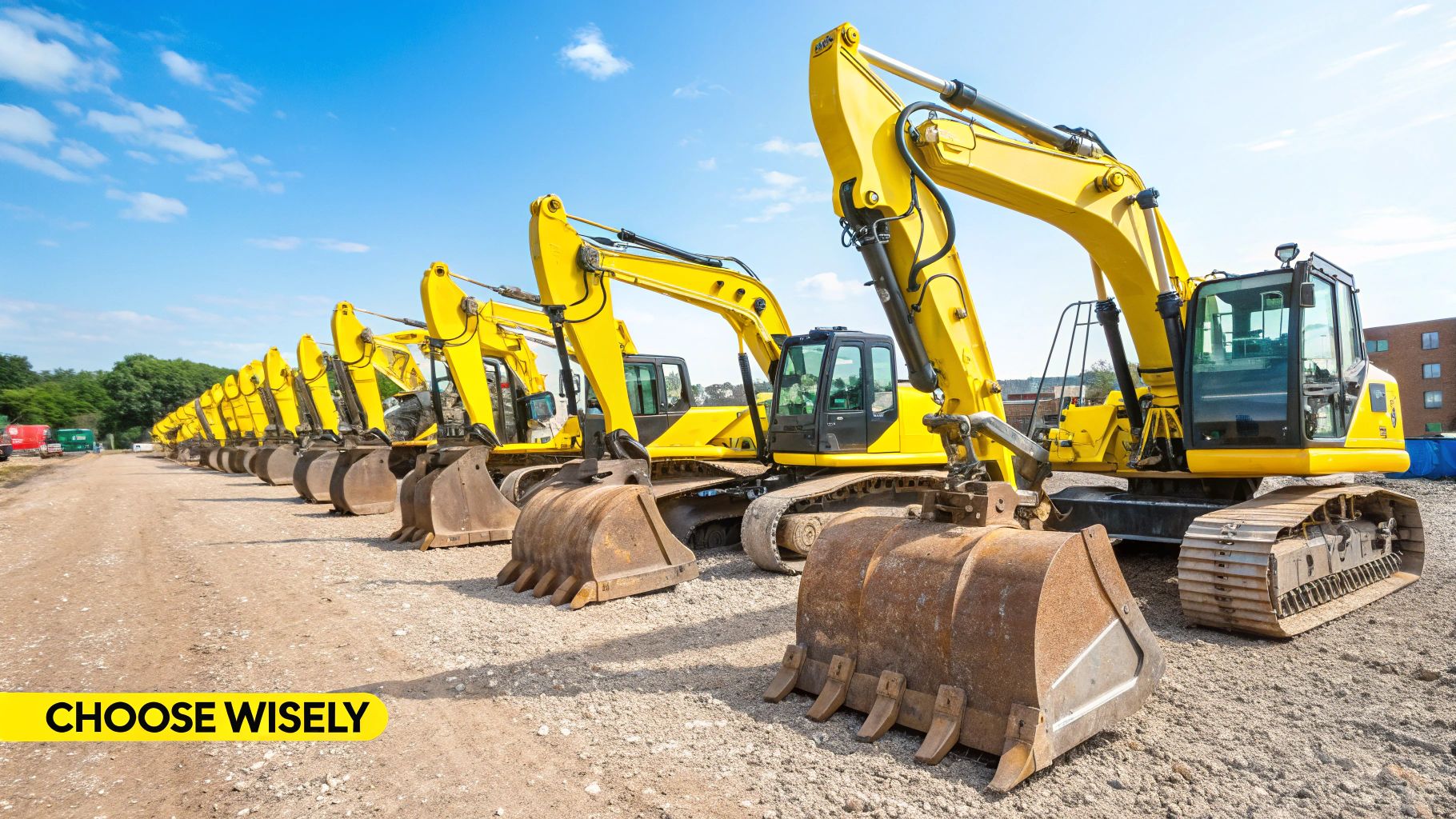
The true measure of an excavator with a hammer isn't found in a spec sheet. It's proven on the job site, where it smashes through operational bottlenecks and keeps projects on track. The ability to deliver massive, focused force makes it an absolute game-changer across a surprising number of industries. Whether you're tearing down an old building or carving a path through solid rock, the hydraulic hammer is the ultimate problem-solver.
This incredible versatility is why you see them everywhere. The global market for these attachments is on a strong growth trajectory, driven by a boom in infrastructure projects and urbanization worldwide where breaking things efficiently and safely is non-negotiable.
Construction And Demolition
On any construction or demolition site, the excavator hammer is a front-line soldier. It’s the go-to tool for breaking down reinforced concrete, from stubborn old foundations to bridge decks and support columns. It is a far more precise and controlled method than a wrecking ball, especially when you are working in tight urban spaces with neighbors close by.
It is just as crucial in road construction. The hammer pulverizes old asphalt and concrete pavement, clearing the way for repairs or replacement. It also makes short work of rock ledges and other geological surprises that would otherwise bring the entire job to a grinding halt.
Quarrying And Mining Operations
In the world of quarrying and mining, efficiency is everything. Hammers are essential for what is called "secondary breaking", smashing down oversized boulders that are too big for the primary crusher to handle. A common challenge is when blasted rock is too large for the processing plant.
This one application can make or break the profitability of an operation. By reducing those massive rocks to a manageable size right in the pit, the hammer ensures a smooth, continuous flow of material into the plant. This simple step prevents costly clogs and production delays that can cripple a quarry's output.
Trenching And Utility Installation
Laying pipelines or utility cables is straightforward until you hit solid rock. Then, a standard bucket is useless. This is where an excavator with a hammer becomes the crew's most valuable player.
It can carefully and precisely carve a trench right through bedrock, allowing crews to continue laying essential infrastructure. This is absolutely critical for long-haul projects like pipelines, where the route might cross all kinds of unpredictable terrain. The hammer ensures the job stays on schedule, no matter what is buried underground.
An excavator hammer attachment transforms an impassable obstacle into a manageable task. Whether it's a concrete foundation or a stubborn rock formation, the hammer provides the focused power needed to clear the path and keep the project moving forward.
The table below breaks down how different sectors put these powerful tools to work.
Industry Applications for Excavator Hammer Attachments
| Industry | Primary Task | Key Benefit |
|---|---|---|
| Construction | Breaking up concrete foundations, roads, and bridges | Increases demolition speed and precision |
| Demolition | Tearing down structures in controlled environments | Enhances safety over traditional methods |
| Quarrying | Secondary breaking of oversized boulders | Prevents crusher downtime and boosts output |
| Mining | Breaking rock in open-pit or underground sites | Improves material handling efficiency |
| Civil Engineering | Trenching through rock for utility installation | Overcomes geological obstacles, keeps projects on time |
| Landscaping | Breaking up large rocks and preparing sites | Speeds up site prep in difficult terrain |
| Specialized Marine | Underwater rock breaking for channel clearing | Enables construction in otherwise inaccessible areas |
As you can see, the core function, delivering powerful impact, solves unique problems in each field, driving efficiency and enabling projects that would otherwise be impossible.
Specialized Amphibious Applications
Now, take all that power and put it on a machine that can walk on water. The value of a hydraulic hammer skyrockets when it is combined with specialized amphibious equipment, and this is where the expertise of Wilco Manufacturing really shines. By mounting a hammer onto an amphibious excavator, crews can tackle jobs in saturated or submerged environments that defeat standard machines.
Consider a pipeline installation project in a Louisiana marsh. The crew encounters a submerged, abandoned concrete piling directly in their path. A conventional excavator cannot reach it. Instead of building a costly temporary causeway, a Wilco amphibious excavator travels through the wetland, wades into the water, and uses its hammer to demolish the piling, clearing the way in a fraction of the time.
These unique applications include:
- Underwater Rock Breaking: During dredging projects, hidden rock formations can block channels or prevent harbors from being deepened. An amphibious excavator wades directly into the water, using its hammer to break up the rock and clear a path. You can learn more about our specialized equipment for dredging operations.
- Pipeline Work in Wetlands: Laying pipe through swamps and marshes often means dealing with submerged rock or old concrete. Our amphibious machines navigate these tough conditions to perform the necessary breaking, eliminating the need for costly dewatering or temporary access roads.
- Environmental Cleanup: Sometimes, contaminated concrete structures in rivers or coastal areas need to be removed. An amphibious excavator with a hammer can get right in the water to safely demolish these structures, aiding in critical habitat restoration.
These examples show what is possible when you pair the right tool with an expertly engineered amphibious undercarriage. It gives project managers the confidence to take on jobs in the most challenging environments, knowing they have a solution for even the toughest obstacles.
How to Choose the Right Hydraulic Hammer
Picking the right hydraulic hammer for your excavator isn't just about buying a new attachment. It's a decision that directly affects your job's productivity, your crew's safety, and the lifespan of your machine. Get it wrong, and you are looking at poor performance, unnecessary wear and tear, or even a dangerously unstable setup.
Making a smart choice means thinking about how the hammer, the excavator, and the job itself all fit together. You’re essentially building a balanced system. The goal is to match the attachment's power with the machine's capabilities to get the most work done without breaking something in the process.
Aligning Hammer and Excavator Specifications
First things first, you have to make sure the hammer is actually compatible with your excavator. This is more than just seeing if the bracket fits. A proper match in weight and hydraulic specs is absolutely essential for the machine to operate safely and effectively.
- Operating Weight: The hammer's weight has to be in the sweet spot for the excavator's size. If the hammer is too heavy, the excavator can become unstable, a serious tipping hazard. On the flip side, a hammer that’s too light will not have the mass behind it to break tough material efficiently and can send excessive vibration back through the machine.
- Hydraulic Flow Rate: This is all about speed, measured in gallons per minute (GPM). Your excavator has to supply the GPM the hammer needs to cycle properly. Too little flow means a slow, weak hammer. Too much flow can cause the system to overheat, leading to fried seals and component failure.
- Operating Pressure: Measured in pounds per square inch (PSI), system pressure is what gives the hammer its hitting power. The excavator’s relief valve settings must align with the hammer's required pressure range. A mismatch can damage the hydraulic systems on both the attachment and the machine itself.
When an excavator and hammer are well-matched, they work together as a single, cohesive unit. When they are not, it is like they are fighting each other. Taking a few extra minutes to check these specs can save you a fortune in downtime and repairs.
Matching Performance to the Material
Once you've confirmed the hammer and excavator are a good pair, it is time to think about the job. You need to pick a hammer that is built to handle the specific material you're breaking. This comes down to two key numbers: impact energy and impact frequency.
Impact energy is the raw force of each blow, measured in foot-pounds. For really hard, dense stuff like solid granite or heavily reinforced concrete, you need high impact energy to deliver a powerful punch.
Impact frequency, measured in blows per minute (BPM), is how fast the hammer hits. For softer or more brittle materials like asphalt, limestone, or weaker concrete, a higher frequency works better. The rapid-fire blows quickly shatter the material. It is all about finding the right combination for your most common applications.
Considering Hammer Design and Jobsite Conditions
Finally, think about where you will be working. The physical design of the hammer can make a big difference depending on the environment.
- Box-Style (Silenced) Hammers: These hammers have a fully enclosed housing that muffles the noise. They have become the standard for work in cities or near residential areas where noise complaints are a real issue. That enclosed case also does a great job of protecting the power cell from dust and debris.
- Open-Frame Hammers: With a more exposed design, these models are often a bit lighter and can be easier to get to for field service. You’ll typically see them in quarries, mines, and other remote sites where noise is not a primary concern.
Choosing the right tool is a process of elimination. By starting with machine compatibility, then narrowing it down by material type and job site conditions, you can find the perfect hydraulic hammer. This ensures your excavator with hammer is set up for top performance, giving you the power and efficiency you need to get the job done right.
To help tie all this together, here’s a quick checklist you can run through when making your selection.
Hydraulic Hammer Selection Checklist
This checklist walks you through the critical factors to consider when matching a hydraulic hammer to your excavator and project. Answering these questions will help ensure you make a safe, productive, and cost-effective choice.
| Consideration | Key Question to Ask | Why It Matters |
|---|---|---|
| Excavator Compatibility | Is the hammer's operating weight within the excavator's recommended range? | Prevents dangerous instability and tipping hazards while ensuring effective breaking force. |
| Hydraulic Flow (GPM) | Can my excavator provide the GPM required by the hammer manufacturer? | Ensures the hammer cycles at the correct speed for optimal performance without overheating the hydraulic system. |
| Hydraulic Pressure (PSI) | Does my excavator's relief pressure match the hammer's required operating range? | Guarantees the hammer delivers its full impact power without damaging hydraulic components. |
| Material Type | Am I breaking hard rock (granite) or softer material (concrete, asphalt)? | Determines whether you need high impact energy (for hard rock) or high frequency (for softer material). |
| Jobsite Noise | Are there noise restrictions or sensitive neighbors near the worksite? | A silenced, box-style hammer is essential for urban or noise-sensitive environments. |
| Mounting & Connections | Do I have the correct mounting bracket and hydraulic couplers for the hammer? | Ensures a secure connection and proper hydraulic function, preventing leaks and unsafe operation. |
| Tool/Chisel Type | What tool point is best for the application (chisel, moil, blunt)? | Using the right tool improves breaking efficiency and reduces wear on the hammer. |
Thinking through each of these points before you buy or rent will put you in the best position for success on the job. A few minutes with this checklist can save you hours of frustration and thousands of dollars down the road.
Essential Maintenance and Safety Practices
An excavator with a hammer is a serious investment in your job site's productivity. But to get the most out of it and keep it running for years, you have to be just as serious about upkeep and safety. A well-maintained hammer is not just more effective, it’s safer for your crew and far less likely to cause the kind of expensive downtime that throws a whole project off schedule.
Protecting that investment starts with simple, consistent daily checks and a commitment to smart operating practices. These are not just suggestions, they are non-negotiable routines for any team that relies on a hydraulic hammer. A quick inspection before each shift can catch a small problem before it turns into a major failure, keeping your machine an asset instead of a liability.
Critical Daily Maintenance Checks
Before firing up the machine, the operator should always do a thorough walk-around, paying close attention to the hammer attachment itself. This does not have to take long, but it needs to be done right every single time.
Here is what to look for:
- Hydraulic Hoses: Check for any leaks, scuffs, or cracks. A busted hose means a sudden loss of hydraulic pressure, which is both dangerous and messy.
- Tool Bit and Retainers: Inspect the tool for excessive wear, cracks, or a "mushroomed" tip. You also need to confirm the retaining pins are secure and in good shape so the tool does not fly out during operation.
- Greasing Points: Proper lubrication is arguably the single most important thing you can do to prevent premature wear. Hit all the designated grease points with the manufacturer-recommended lubricant to keep friction from destroying the tool and bushings.
A common mistake we see is crews "under-greasing" or grabbing whatever grease is handy. Using the wrong type, or not enough, allows for metal-on-metal contact that can quickly wreck critical internal parts and lead to a catastrophic breakdown.
Beyond these daily visual checks, you will need to periodically monitor the nitrogen gas charge. The right pressure in the accumulator is what gives the hammer its punch. Too low, and you get weak performance, too high, and you can blow out the internal seals. Sticking to the manufacturer's guide for checking and recharging the nitrogen is essential for getting maximum power.
For specialized amphibious equipment, our expert team provides comprehensive service and maintenance to keep your machinery in peak condition. This ensures your investment is protected and ready for the toughest jobs.
Foundational Safety Protocols
Running a powerful excavator hammer is about more than just skill, it requires a constant awareness of the risks involved. The incredible force this attachment generates can create serious hazards if not handled with respect. That is why clear, enforced safety rules are absolutely critical for protecting everyone on the job site.
The first rule is simple: establish a safe work zone. Flying debris can travel a lot farther than you think, so keeping people and other equipment at a safe distance is your best defense against accidents.
Next, operators need to master the correct operating angle. The hammer should always be perpendicular to whatever it is breaking. Hitting the material at an angle creates immense side-loading stress on the tool bit and internal components, which can easily snap the tool or cause the bushings to fail prematurely.
Perhaps the most important rule for both safety and maintenance is to avoid "blank firing." This is when the hammer is running without the tool bit being pressed firmly against a surface. With nothing to absorb the impact, the piston’s energy slams back into the hammer's own components, sending a destructive shockwave through the attachment that can cause severe internal damage. Operators must be trained to stop the hammer the instant the material gives way.
Even with diligent maintenance, unexpected failures can happen. It is smart to explore equipment breakdown insurance options to protect your business from the financial fallout of a sudden breakdown.
Overcoming Project Challenges with Amphibious Solutions
The raw power of an excavator fitted with a hydraulic hammer is something to behold. It can turn a standard digging machine into a demolition powerhouse, ready to take on rock and concrete that would otherwise bring a project to a dead stop. But what happens when those obstacles are sitting in the middle of a swamp or submerged in shallow water?
This is where brute force needs a dose of brilliant engineering.
Imagine trying to lay a pipeline through a waterlogged, rock-strewn marsh. Or a coastal restoration project where old, submerged concrete structures are in the way. In these situations, the real problem is not just breaking the material, it is getting to it in the first place. That is the exact challenge Wilco Manufacturing was built to solve. By mounting a high-impact hydraulic hammer onto a fully amphibious excavator, we deliver that breaking power right where it is needed, no matter the terrain.
Specialized Engineering for Unreachable Jobsites
Our amphibious machines are specifically designed to traverse swamps, marshes, and shallow waterways, environments that would instantly immobilize conventional equipment. This single capability completely changes the game for planning and executing complex projects.
Instead of spending a fortune on temporary access roads or elaborate dewatering systems, a Wilco amphibious excavator with a hammer can simply drive through the challenging terrain to get to work. This direct approach not only saves an incredible amount of time and money but also dramatically reduces the project's environmental impact.
The true value of an amphibious excavator with a hammer is not just about breaking rock. It's about its ability to turn an impossible job into a completed one by removing access as the primary obstacle.
This unique combination opens the door to a wide range of tough jobs. We are talking about everything from clearing underwater obstructions for dredging projects to breaking rock for utility lines in saturated ground. Of course, any major demolition or breaking work requires meticulous planning. A key part of tackling these challenges is mastering construction project risk management.
A Global Need for Advanced Solutions
The demand for powerful, adaptable breaking equipment is on the rise worldwide. As cities expand, major infrastructure initiatives are driving investments that require heavy-duty demolition. In these populated areas, hydraulic breakers are quickly becoming the go-to solution, offering a safer and more efficient alternative to traditional blasting. You can find more on this trend in a detailed market report covering the hydraulic breaker industry.
At Wilco Manufacturing, we exist to help you meet these demands head-on, even in the most unforgiving environments. Whether you are looking to purchase a new machine or need to explore our versatile amphibious excavators for rent, our team has a solution ready.
When your project hits a wall of tough material in an even tougher location, don't let access stand in your way. Contact Wilco Manufacturing today to see how our specialized amphibious equipment can bring serious breaking power to your most challenging jobsites.
Got Questions? We've Got Answers.
Even after you have got the basics down, you are bound to have a few questions when it comes to running a hydraulic hammer. It is only natural. Getting these details right is what separates a smooth, productive job from a costly, frustrating one. Let's tackle some of the most common things operators and managers ask us.
Impact Energy vs. Impact Frequency: What's the Difference?
This is a big one. Think of impact energy as the raw, brute force of a single punch. It is the heavy-hitting power, measured in foot-pounds, that you need for the really tough stuff. We are talking about busting up massive granite boulders or thick, heavily reinforced concrete. It is slow, deliberate, and powerful.
On the flip side, impact frequency is all about speed, the number of blows per minute (BPM). This is your go-to for more brittle materials like asphalt, shale, or standard concrete. Instead of one massive hit, you are delivering a rapid-fire series of strikes that create and exploit stress fractures, shattering the material quickly. The real art is learning how to balance the two for whatever you are up against.
Can I Use Any Hammer on Any Excavator?
This question comes up a lot, and the answer is a hard no. You cannot just mix and match. Getting this pairing right is not just about performance, it is a critical safety issue.
You have to line up three key specs perfectly:
- Carrier Weight: The excavator has to be hefty enough to handle the hammer's weight and recoil without tipping over or becoming unstable.
- Hydraulic Flow (GPM): The hammer needs a specific flow rate (gallons per minute) from the excavator's hydraulic system to cycle properly. Too little, and it will not work, too much, and you will burn it out.
- System Pressure (PSI): The machine's pressure output must fall within the hammer's required operating range. This is what gives the hammer its breaking power.
Get any of these wrong, and you are looking at poor performance at best, and a catastrophic failure of the hammer or even the excavator at worst.
What About Working in Tough Conditions?
Jobsites are not always clean and dry. If you are working underwater, a specialized underwater kit is not just a good idea, it is essential. This kit pumps compressed air into the hammer, creating positive pressure that keeps water and grit from getting inside and wrecking the internal components.
For extremely dusty sites, it all comes down to rigorous maintenance. You have to be relentless about cleaning the attachment and checking the seals to keep abrasive dust out of the hydraulic system. This is exactly why Wilco builds such robust equipment, we know our machines are going to be pushed to the limit in the toughest environments imaginable.
When your project demands serious breaking power in places that would destroy ordinary equipment, you need something special. Trust Wilco Manufacturing to deliver the amphibious machinery that not only works but thrives in the world's most challenging conditions.
Find the solution to your toughest project needs by exploring our custom-built amphibious equipment.