When deciding between a mini excavator and a backhoe, it boils down to one key question: does your project require a specialist or a multi-purpose tool?
A mini excavator is a pure digging machine. Its ability to rotate a full 360 degrees on its tracks makes it the undisputed champion of trenching and excavation in confined spaces. A backhoe, on the other hand, is the Swiss Army knife of the job site. It has a loader on the front for moving material and a digging arm on the back for excavating. Understanding their core differences is critical for project success.
Choosing Your Compact Equipment
Selecting the right machine is a decision that directly impacts your project’s budget, timeline, and overall outcome. Each piece of equipment brings a unique skill set to the table, and understanding their fundamental design differences is the first step to making an informed choice.
The most obvious difference is their construction and mobility. A mini excavator’s cab and boom sit on a tracked undercarriage and can spin completely around. This means an operator can dig, swing, and dump in almost any direction without moving the machine’s base, a game-changer for working in congested urban areas or performing delicate landscaping.
A backhoe is built on a wheeled, tractor-style chassis. It combines a loader bucket up front with a digging arm, or “hoe,” in the back. This two-in-one design is incredibly useful on sites where you need to dig a trench and then immediately load the spoils into a truck. The trade-off is its digging movement is far more limited than an excavator’s.
This graphic breaks down key performance differences between typical models.

As you can see, the backhoe generally brings more raw power and reach, but the mini excavator’s lighter footprint makes it ideal for working on finished surfaces or sensitive ground.
To provide a clearer picture, here’s a quick summary of their core differences.
At a Glance: Mini Excavator vs. Backhoe
| Feature | Mini Excavator | Backhoe |
|---|---|---|
| Primary Function | Specialized digging and trenching | Multi-purpose: digging, loading, material handling |
| Mobility | Tracked undercarriage; excellent on soft ground | Wheeled chassis; faster on paved surfaces |
| Rotation | 360-degree house rotation | Limited swing arc (typically 180-200 degrees) |
| Size & Access | Compact footprint; ideal for tight spaces | Larger, less maneuverable in confined areas |
| Best Use Case | Precision excavation, utility work, landscaping | General construction, road work, loading/unloading |
This table highlights that the choice is less about which machine is “better” and more about which is better for your specific job.
However, standard machines have their limits, especially when the ground becomes soft or submerged. For work in wetlands, swamps, or along shorelines, you need a more robust solution. That’s where specialized amphibious undercarriages from experts like Wilco Manufacturing come in. We modify equipment for these extreme conditions, making it possible to work where conventional machines would get hopelessly stuck.
A Closer Look at What These Machines Can Do
To get to the bottom of the mini excavator vs. backhoe debate, you must look beyond spec sheets to what these machines do on a job site. Their designs are fundamentally different, dictating how they operate, where they excel, and which is right for your project.
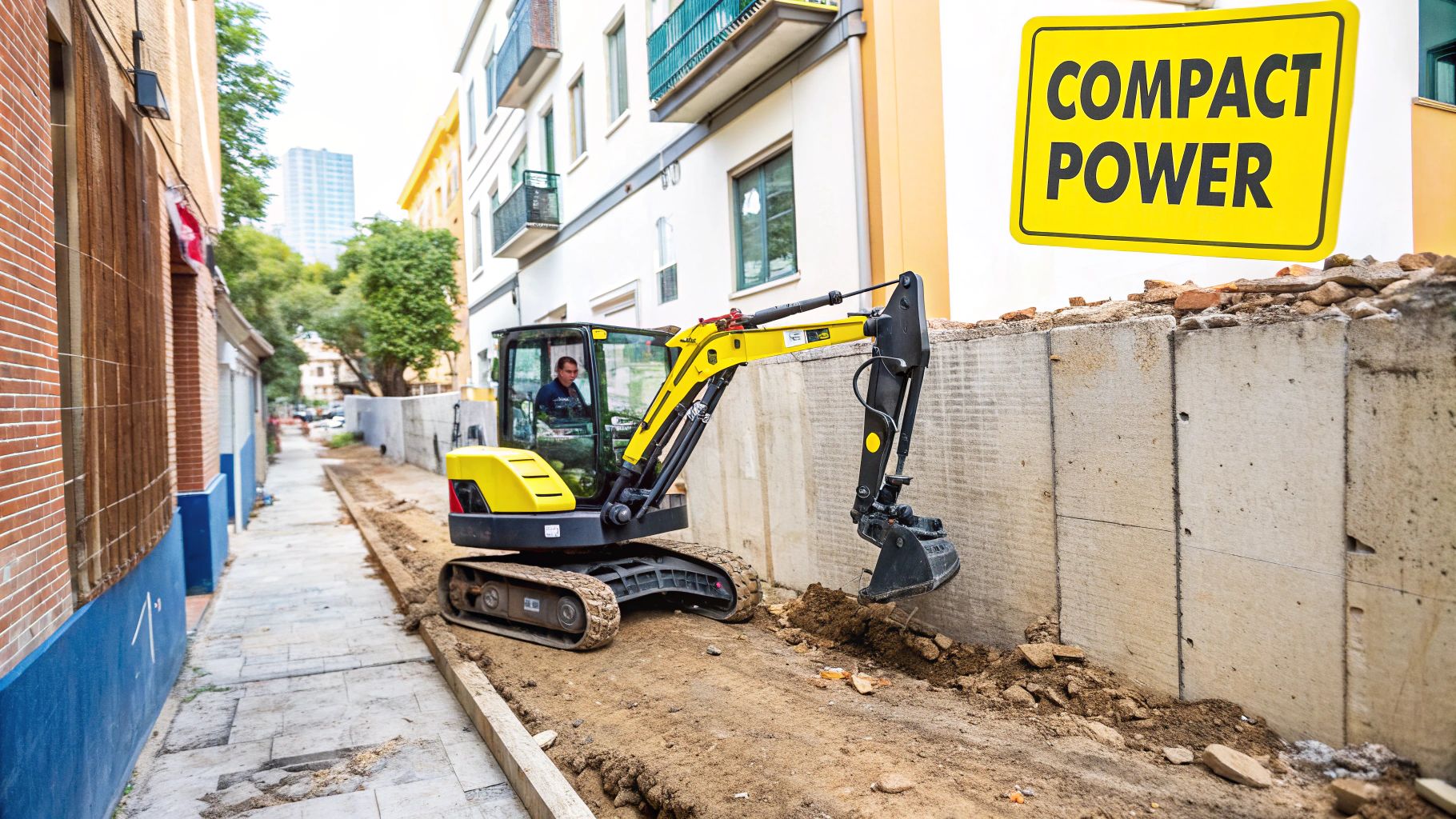
A mini excavator is all about precision and access. Its standout feature is the 360-degree swing of the entire cab and boom assembly. This means the operator can dig in one direction, then swing around and dump the material directly behind them, all without moving the tracks. This capability is transformative in tight spaces.
The Mini Excavator: A Specialist in Precision
Imagine you’re digging a narrow trench for a utility line right up against a building. A mini excavator can park in one spot and excavate the entire trench, swinging to load a truck on the other side. Because of its compact size and controlled swing, it barely disturbs the surrounding ground, making it the go-to machine for delicate landscaping jobs or even indoor demolition.
The backhoe, on the other hand, is built for a different kind of efficiency. It is essentially two machines in one, combining a powerful excavator arm with a front-end loader. This makes it a true workhorse on sites where you need to both dig and move materials.
A backhoe’s biggest advantage is its ability to seamlessly switch from digging with the rear hoe to loading with the front bucket. This two-in-one capability often means you don’t need a second machine on-site, which can be a huge saving in time and money.
The Backhoe: The Versatile Workhorse
Consider a typical road repair project. The operator can use the backhoe’s rear arm to break up old asphalt and dig out the damaged section. Then, they just swivel the seat, drive forward, and use the front loader to scoop up all the debris and dump it into a truck. It’s an incredibly efficient workflow for tasks like backfilling, loading, and general-purpose excavation.
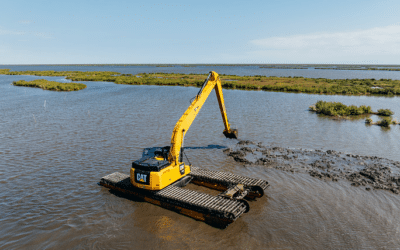
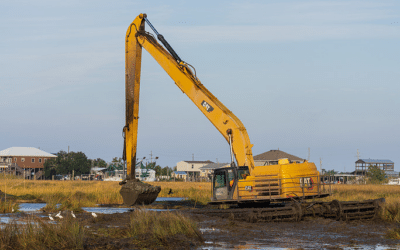
Of course, the capabilities of any standard machine stop where solid ground ends. For jobs in swamps, marshes, or shallow water, neither a typical mini excavator nor a backhoe will suffice. That is where specialized amphibious equipment becomes necessary. At Wilco Manufacturing, we can fit an excavator with a pontoon undercarriage, turning it into a machine that can float and work directly in aquatic environments. You can see more of our specialized equipment for dredging and how it makes these challenging projects possible.
Footprint and Maneuverability: A Tale of Two Designs
A machine’s physical size isn’t just a spec on a sheet; it dictates where you can work and how efficiently you can do it. When you’re weighing a mini excavator against a backhoe, their fundamental designs create a significant difference in how they move around a job site.
The mini excavator’s biggest selling point is its compact, nimble nature. It sits on a tracked undercarriage, which spreads its weight and results in low ground pressure. This makes it the go-to choice for working on delicate surfaces like manicured lawns or landscaped areas where damaging the ground is not an option.
The Power of 360-Degree Swing
What truly sets the mini excavator apart is its ability to rotate its entire upper structure, the house and boom, a full 360 degrees. Most models feature minimal or even zero tail swing, meaning the back of the machine doesn’t extend past the tracks as it turns. This is a game-changer in tight spaces.
For example, a crew working on a utility line in a narrow city alley can use a mini excavator to dig a trench, swing, and dump the spoil into a truck, all without repositioning its tracks. A backhoe simply cannot replicate that kind of self-contained movement.
The backhoe is built on a heavy, wheeled chassis similar to a farm tractor. While this design is excellent for driving across a large site or even down the road, it demands much more space to operate effectively.
A backhoe needs room to breathe. Its digging arm has a limited swing arc, typically around 200 degrees, which means the operator has to constantly reposition the entire machine to do what a mini excavator can from a single spot.
This massive footprint makes it a poor fit for jobs like indoor demolition or backyard landscaping. But for wide-open projects like municipal roadwork or digging foundations on a new build, where space is not an issue, its road-worthiness is a major advantage.
The operational flexibility of mini excavators is why they have become so dominant in the compact equipment market. Their ability to handle excavation, grading, and demolition on various terrains, paired with better fuel efficiency, has made them a favorite for contractors globally.
This mobility gap becomes even more apparent in extreme conditions. A tracked mini excavator will always outperform a wheeled backhoe on soft ground, but both have their limits. When the job takes you into a swamp or wetland, only a specialized piece of equipment like an amphibious excavator will do, proving just how critical the right undercarriage is for the job.
Task Specialization vs. Versatility: Which Wins?
When weighing a mini excavator against a backhoe, the real question boils down to specialization versus versatility. Is it better to have a machine built to do one thing exceptionally well, or a multi-tool that can tackle a bit of everything? Getting this right is a huge factor in job site efficiency.
The classic appeal of a backhoe is its “jack-of-all-trades” nature. It’s a two-for-one deal: a loader on the front and a digging arm on the back. This means it can dig a trench and then immediately spin around to backfill it or load the spoils onto a truck. That built-in versatility can save you from bringing a second machine to the site, which cuts down on transport costs and crew hours.
But there is a flip side to that versatility. A backhoe does many things well, but it is not a master of any single task. Its digging power and finesse are solid for general-purpose work, but they cannot compete with a machine designed exclusively for excavation.
The Specialist’s Edge: The Mini Excavator
A mini excavator has one job: to dig. Every component of its engineering, from the hydraulics to the chassis, is focused on that single purpose. The result is superior digging force, greater depth, and more precise control than you would find in a comparable backhoe.
The 360-degree swing of a mini excavator is a game-changer for efficiency. It can dig, swing, and dump material anywhere around its perimeter without repositioning the entire machine. A backhoe, with its more limited 200-degree swing, simply cannot keep up in tight or complex digging scenarios.
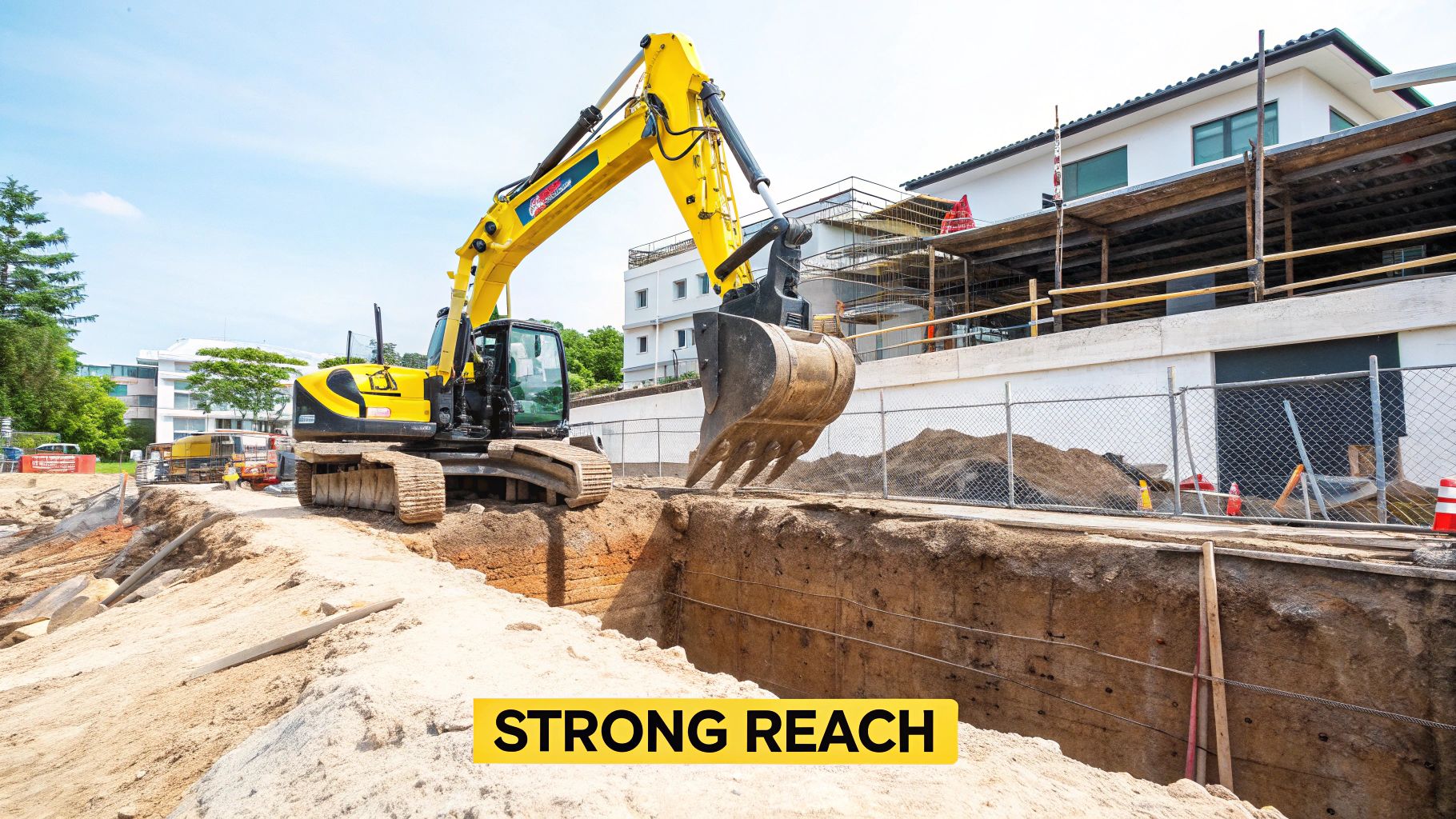
This specialization also makes it a fantastic platform for attachments. A mini excavator’s hydraulic system is built to power a whole arsenal of tools, turning it from a simple digger into a multi-talented specialist.
- Augers for drilling clean holes for posts and footings.
- Hydraulic hammers to make short work of rock or concrete.
- Grapples for clearing land or managing demolition debris.
- Compaction wheels to prep trench bottoms for utilities.
The ability to swap between these tools in minutes gives the mini excavator its edge. You can see just how adaptable they are by exploring the range of Wilco Marsh Runner attachments available. For any job where digging is the main event, this focused power usually translates to getting more work done, faster.
You’re seeing a real shift on the ground. Many contractors are moving away from the single backhoe model and instead pairing a compact excavator with a skid steer or compact track loader. They have found that two specialized machines can often outperform one generalist.
The backhoe loader used to be the default choice, but times are changing. The market has leaned heavily toward compact excavators because their efficiency and agility are hard to beat. When the primary task is digging, the focused power and attachment flexibility of a mini excavator almost always give it the upper hand over a backhoe’s generalized design.
Evaluating Ownership Costs And Project ROI
When you decide between a mini excavator and a backhoe, the sticker price is just the beginning. To make a smart business decision, you must look at the total cost of ownership (TCO). This includes everything: fuel, maintenance, transport, and resale value. That is the only way to get a real handle on your project’s return on investment (ROI).
For any major machinery purchase, arranging construction equipment financing is a key step in managing these costs. Right off the bat, a mini excavator usually has a lower initial price tag, which makes it a compelling choice for smaller companies or businesses working with a tight budget.
Breaking Down Long-Term Expenses
The day-to-day running costs are where a mini excavator really starts to shine. Its smaller engine and lighter build mean it uses less fuel, which can add up to huge savings over the machine’s lifetime, especially on longer projects. Maintenance is typically simpler, and transporting it to the job site is easy, often requiring only a heavy-duty truck and a suitable trailer.
On the other hand, the backhoe’s higher upfront cost starts to make sense when you consider its two-in-one design. If your site requires significant digging and material handling, a single backhoe can replace both a mini excavator and a separate loader. This consolidation saves you from buying or renting a second machine and cuts down on extra labor and transport costs.
A backhoe’s versatility is its greatest financial asset. If a project demands frequent switching between excavation and loading, the backhoe’s ability to perform both tasks can deliver a much faster ROI by eliminating the need for a two-machine fleet.
Rental Market and Project-Specific ROI
The rental market also plays a huge part in this financial puzzle. For many smaller operations, renting provides access to the right machine without the long-term burden of ownership. The global mini backhoe rental market, expected to hit around $211.5 million in 2023, shows just how vital this machine is for contractors who need flexibility without a large capital investment.
Ultimately, the right choice comes down to your business model. If you are a specialist who does a lot of digging in confined areas, a mini excavator will almost certainly give you a better ROI thanks to its efficiency and lower operating costs. But if you are a general contractor juggling a wide variety of tasks, the backhoe’s all-in-one capability will be the more profitable investment.
Making The Right Choice For Your Project
So, when it comes to the mini excavator vs. backhoe debate, how do you make the final call? It’s not about finding the “better” machine overall. It is about picking the right tool for the specific job in front of you.
A mini excavator is your go-to when precision and a small footprint are non-negotiable. Its compact size, 360-degree swing, and gentle touch on the ground make it a champion in tight quarters.
- Residential Landscaping: Imagine maneuvering in a client’s backyard to dig for a new patio or water feature without tearing up the lawn.
- Urban Utility Work: It is perfect for trenching in cramped alleys or on a busy city street where you cannot afford to block traffic.
- Indoor Demolition: When you need to work inside a building, the mini excavator’s size and lower emissions are a lifesaver.
Where The Backhoe Excels
On the other hand, a backhoe is the undisputed king of versatility. If your project demands a machine that can dig on one end and load material on the other, the backhoe is a one-machine army.
It truly shines on general construction sites, small farms, and municipal road maintenance crews. The ability to switch from digging to loading streamlines the entire workflow, which means less time wasted and fewer machines needed on site.
But what happens when the ground gets soft? Standard excavators and backhoes, whether on tracks or wheels, will get bogged down and become useless in swamps, wetlands, or during dredging operations.
This is exactly where our expertise at Wilco Manufacturing comes into play. We specialize in retrofitting standard excavators with amphibious undercarriages, creating powerful machines that operate flawlessly in the toughest aquatic environments. For these specialized jobs, looking into amphibious excavators for rent is a smart, cost-effective move.
Ultimately, choosing the right equipment saves you time, money, and headaches. If you are working on solid ground, the choice between a mini excavator and a backhoe is relatively straightforward. But when your project takes you into the water, our experts are here to help you find the right amphibious solution.
Common Questions Answered
Even with all the specs laid out, choosing between a mini excavator and a backhoe often comes down to a few specific, practical questions. Let’s tackle some of the most common ones that come up in the field.
Can a Mini Excavator Really Replace a Backhoe?
Not completely. A mini excavator is a master of one trade: digging. Its 360-degree rotation gives it an incredible advantage for trenching, foundation work, and demolition, especially when you do not have a lot of room to maneuver.
A backhoe, on the other hand, is a multi-tool. It is designed to dig with the hoe and then immediately lift and load with the front bucket. To get that same one-two punch from a mini excavator, you would have to bring in a second machine like a skid steer to handle the material.
Which One Makes More Sense for a Small Construction Company?
This really boils down to your primary type of work. If most of your contracts are for precision digging, such as utility lines, landscaping in tight backyards, or small foundations, a mini excavator will be your moneymaker. It is just faster and more efficient for that kind of focused work.
But if your jobs are all over the map, requiring a bit of digging here and some material loading there, a backhoe’s versatility is hard to beat. It can save you from having to haul two machines to a smaller job site. Many companies start with a backhoe for its flexibility and then add a mini excavator as they start winning more specialized digging projects.
Take a hard look at your last 10-15 jobs. The work you have already done is the best indicator of what you will be doing next. It will tell you whether you need a digging specialist or a versatile all-rounder.
What’s the Best Machine for Working on Wet or Unstable Ground?
When you get into soft, wet, or swampy conditions, standard equipment starts to struggle. A tracked mini excavator has a clear edge over a wheeled backhoe with its lower ground pressure, but even it can get bogged down in really soupy terrain like marshes or shorelines.
That is when you must call in the specialists. An amphibious excavator is what you need for these extreme environments. It is built with a pontoon-style undercarriage designed to float and navigate where conventional machines would sink. This is where companies like Wilco Manufacturing step in, providing the purpose-built equipment that keeps projects moving in conditions that would stop anything else.
When your job site looks more like a swamp than solid ground, you are beyond the limits of standard machinery. Wilco Manufacturing builds the solution. Contact us to see how our amphibious excavators and custom undercarriages can handle the toughest terrain you can find.